
This is not a showreel. This is a pulse check. A visceral journey into the heart of what’s possible when audacious creative vision collides with the planet’s most unforgiving and breathtaking terrain. Feel the air thin at 19,000 feet, the sub-zero chill of a Spiti Valley winter, the raw, kinetic energy of a 300-person crew moving in symphonic precision. From orchestrating National Geographic’s perilous Mission Arctic to executing RevZilla’s ascent to the world’s highest road; from managing the high-stakes drama of Endemol Shine India’s survival epics to choreographing PowerDrift’s most iconic automotive odysseys, this is where world-class line production in India becomes expedition-level artistry. It’s where meticulous location scouting in Himachal Pradesh and Ladakh uncovers landscapes that defy imagination, and where navigating the labyrinth of film permits, crew logistics, and production management is transformed from an obstacle into your greatest strategic advantage.
Now, picture your most ambitious script unfolding against this epic canvas, not as a struggle, but as a masterpiece of controlled execution. We are the invisible architecture behind India’s most legendary Himalayan stories. Let’s build yours.
Our gratitude extends to every collaborator who shared in this ascent. These opportunities were not just projects; they were proving grounds that honed our expertise and solidified our belief that no vision is too ambitious when met with relentless execution. Thank you. Because while we deliver immaculate results, we remain perpetual students, learning not just the craft, but the human story behind every creator. We’ve learned to adapt to each unique vision, to listen deeply, and to offer our absolute best….. for the story always comes first.
over the years
2024 : MILLION DOLLAR LISTING INDIA
India’s ultra-luxury real estate market, where billion-rupee deals are sealed with a handshake and every property tells a story of ambition carved in marble and glass. As the line producer for this groundbreaking adaptation of the Emmy-nominated franchise, production management became the invisible architecture behind every frame the logistical precision that transformed Gurugram’s opulent penthouses and Delhi’s heritage mansions into television gold.
From October through November 2024, coordinating multi-location shoots across the National Capital Region’s most exclusive addresses demanded something beyond conventional planning: it required the instinct to anticipate the unexpected, negotiate the impossible, and deliver seamless execution while six charismatic realtors navigated million-dollar transactions under camera.
The series, produced by Banijay Asia premiered on SonyLiv on October 25, 2024, marking the second international adaptation of this prestigious format. Award-winning director Omkar Potdar, renowned for character-driven documentary filmmaking and unscripted reality television including Sons of the Soil and Dream ON, helmed the project with his signature style that transforms real-life drama into cinematic storytelling. The production was overseen by Siddhu Ingle as Head of Production, ensuring every logistical element aligned with the show’s premium aesthetic and tight delivery schedule.
Line production for a reality series of this magnitude meant orchestrating location scouting across Gurugram’s prestigious golf course estates, coordinating permits for high-security residential complexes, managing equipment logistics for multi-camera setups in luxury showrooms, and maintaining budget discipline while delivering production value that matched international standards. Each shoot day brought the challenge of balancing spontaneous real-life moments with the technical requirements of premium television production—a dance between control and chaos that defines successful unscripted content.
Production House: Banijay Asia for SonyLiv
Period: October – November 2024
Location: Premium Real Estate in Gurugram and National Capital Region[3][2]
Role: Line Producer – Production Management & Logistics[5][6]
2024 star vs food survival – season 2
Close your eyes and taste this: Bollywood’s brightest stars stripped of luxury, thrust into India’s most extreme wilderness, where survival instincts collide with culinary creativity and every meal becomes a battle against nature itself. As line producer for Endemol Shine India’s Award Winning Star vs Food Survival Season 2 on Discovery, production management transcended conventional reality television, this became an intricate dance of risk mitigation, creative storytelling, and logistical precision across two of India’s most challenging filming environments
Star vs Food Survival Season 2 was filmed in Mawsynram, the wettest place on Earth where rainfall measures in meters not millimeters, and Himachal Pradesh’s remote mountain villages where altitude and accessibility test every production decision. From April through June 2024, the role demanded exhaustive pre-production research and location scouting across Northeast India and the Himalayas, designing survival challenges that balanced genuine difficulty with celebrity safety, coordinating with local communities in Shoja, Tirthan, and Falachan, and ensuring seamless integration between survival elements and culinary experiences while managing weather-dependent shooting schedules in monsoon-prone terrain.
Produced by Endemol Shine India the visionary producer behind India’s biggest unscripted franchises including Big Boss, Khatron Ke Khiladi and MasterChef India, the series elevated celebrity reality television by merging adventure survival with gastronomic challenges. Directed by Vaibhav Mishra & Gopikrishnan Nair, the series continues the format established in Season 1 where celebrities like Suneil Shetty, Sanjay Dutt, Aparshakti Khurrana, navigated wilderness challenges, maintaining Endemol Shine’s reputation for high-production-value unscripted content that has made them India’s leading non-fiction production house since 2008. The series format challenged celebrities to forage ingredients, build shelters, and create gourmet meals in conditions that test even experienced survival experts, transforming food preparation into visceral entertainment.
Line production for celebrity survival content in remote Himalayan and Northeast locations demanded expertise that spanned wilderness safety protocols, equipment weatherproofing for monsoon filming, coordination with local guides and survival experts, securing permits for protected forest areas, and maintaining production timelines while being completely dependent on weather patterns that could shift within hours. The three months of pre-production research and location recce across Northeast India became the foundation for successful execution, identifying safe filming zones, establishing evacuation protocols, mapping ingredient foraging areas, and building relationships with local communities whose knowledge transformed logistical challenges into storytelling opportunities. Each episode required balancing the authentic difficulty that makes survival content compelling with the duty of care owed to celebrity talent and crew working in genuinely challenging environments.
Production House: Endemol Shine India for Discovery
Period: April – June 2024 (including extensive pre-production)
Locations: Mawsynram (Meghalaya) | Shoja, Tirthan, Falachan (Himachal Pradesh)
Role: Line Producer – Survival Production Management & Northeast India Location Research
hyundai live unleashed episode 3 – Kayaking
Ride the river’s fury: White water pounds the Tons River Valley, the echo of rapids crashing between ancient boulders a kayaker battles Grade-IV torrents as the Hyundai Creta N Line dances along cliffside roads above the spray.
As line producer for this extreme cinematic assault, we engineered flawless on-location management: securing shooting access inside Govind Pashu National Park, coordinating athlete safety amid raging Himalayan waters, and synchronizing daring stunts with evocative cinematography. Kayaker Amit Thapa’s pulse-quickening descent demanded timing and vigilance, while our camera teams captured every unscripted moment of triumph and risk.
This wasn’t just a shoot, it was an exercise in balancing high-stakes adventure with uncompromising craft, ensuring each frame delivered both power and poetry.
Production: PowerDrift Studios for Hyundai India
Our Role: Line Producer (Extreme Adventure Production & River Logistics)
Location: Tons River Valley, Govind Pashu National Park (Uttarakhand)
Period: April 2024
hyundai live unleashed episode 2 – mountain biking
Descend into the wild: Imagine a machine bred for tarmac unleashed on Himalayan cliffs – a mountain biking legend racing gravity, the Hyundai Creta N Line hugging Jalori Pass’s serpentine hairpins, forests pulsing with tension.
As line producer for PowerDrift Studios’ ground-shaking episode, we turned adventure filmmaking into precision choreography: scouting pine-carpeted descents in Tungasidhar & Tirthan Valley, arranging permit-clearance for protected altitudes, and orchestrating multi-unit camera crews to capture every nerve-wracking moment. Athletes and machine blur as the story careens through winding passes, where adrenaline turns obstacles into art.
In this episode, every element, speed, terrain, willpower – was elevated by the seamless logistics that made chaos appear effortless. The result: an automotive adventure narrative where danger, beauty, and human resolve collide at every turn.
Production: PowerDrift Studios for Hyundai India
Our Role: Line Producer (Adventure Production & Mountain Logistics)
Location: Tirthan Valley, Jalori Pass (Himachal Pradesh)
Period: March 2024
Kashmir to kanyakumari
Imagine this: A single electric scooter. 10,000 kilometers of Indian terrain. Sixty days that redefined what’s possible when sustainable mobility meets unlimited ambition. As line producer for PowerDrift Studios’ most audacious expedition, the K2K series for Ampere Electric Scooter became more than content creation; it transformed into a cinematic love letter to India’s geographical soul, from the snow-capped peaks of Reasi to the oceanic vastness of Kanyakumari.
From January through March 2024, production management meant orchestrating filming logistics across 26 cities and 12 states, coordinating permissions with forest departments, highway authorities, and heritage site managements, while maintaining creative storytelling that captured both the Ampere Nexus’s revolutionary engineering and India’s breathtaking diversity through four episodes and 240 social media reels. PowerDrift Studios approached this expedition with their signature blend of technical precision and narrative poetry that has made them India’s premier automotive storytelling platform. The series was produced in partnership with Ampere Electric Mobility, led by their innovation team who positioned the journey as the ultimate real-world test of their next-generation Nexus scooter
Line production for a 60-day, pan-India expedition demanded logistics choreography that bordered on military precision, coordinating daily charging infrastructure across remote locations, managing weather-dependent shooting schedules from Kashmir’s sub-zero temperatures to Tamil Nadu’s coastal humidity, securing filming permits across 12 states with varying bureaucratic requirements, handling equipment transport through diverse terrains from mountain passes to desert dunes, and maintaining budget discipline while delivering cinematic production values that matched international travel documentaries.
Every kilometer from Kashmir to Kanyakumari whispers the same truth: India isn’t just a country, it’s a symphony of landscapes, cultures, and dreams, and the only way to truly hear it is to ride it, breathe it, live it, one electric mile at a time.
Production House: PowerDrift Studios
Period: January – March 2024 (60-day expedition) Locations: 26 cities across 12 states – Reasi to Kanyakumari covering 10,000+ kilometers
Role: Line Producer – Pan-India Production Management & Multi-State Logistics
Output: 4 episodes + 240 social media reels
Revzilla/common tread xp – UmlingLa
Two American riders, 19,000 feet above sea level, standing at Umling La – the highest motorable pass on Earth (as i write this – ITS THE MIG LA now as of October 2025 at 19900 ft), where oxygen thins to whispers and the Himalayas pierce the sky like frozen titans guarding the roof of the world.
As line producer for Common Tread/RevZilla’s epic Triumph expedition in August 2024, production management became the invisible architecture behind every breathtaking frame; coordinating a five-member American crew through 1,000+ miles of India’s most unforgiving terrain, from Delhi’s chaotic sea-level sprawl to Ladakh’s oxygen-starved mountain passes where even breathing becomes an act of defiance. This wasn’t just automotive content; it was a cinematic pilgrimage testing Triumph’s all-new Speed 400 and Scrambler 400 X single-cylinder platforms against landslides, washed-out roads, river crossings, altitude sickness, 24-hour riding marathons, and blizzards that turned the final ascent into a snow-blinded battle of will against nature’s raw power.
Produced by Common Tread/RevZilla, America’s leading motorcycle gear retailer and content platform with millions of subscribers dedicated to motorcycle culture, the project brought together Zack Courts and Spurgeon Dunbar as on-camera riders and storytellers whose chemistry and authenticity transformed a product showcase into an adventure narrative that resonates universally with riders. The five-member American team demonstrated world-class expertise in dynamic action cinematography, intimate character-driven documentary filming, and technical precision that captured everything from high-speed motorcycle sequences through Himalayan switchbacks to vulnerable moments of exhaustion at 14,000 feet in Nyoma guesthouses.
Line production for international crews filming high-altitude motorcycle adventures across restricted military zones demanded logistics choreography that went beyond conventional production management, securing permits for filming near the China border in geopolitically sensitive Ladakh regions, coordinating oxygen supplementation and altitude acclimatization protocols, managing equipment weatherproofing through monsoon deluges and snow squalls, establishing contingency routes when landslides closed primary roads (forcing the crew into all-night riding sessions that stretched from 6 AM to 7 AM the following morning), maintaining international production standards while navigating India’s unique filming challenges where “look right, ride left” becomes a survival mantra. The expedition covered extreme environmental contrasts, from 98°F humidity in Delhi to sub-zero blizzards at Umling La, from navigating tuk-tuk traffic and sacred cows on highways to forging glacier-fed rivers where the distinction between “road” and “river” becomes philosophical.
The production captured a 42-minute cinematic documentary that earned hundreds of thousands of views, proving that when meticulous line production meets fearless storytelling, motorcycles become vessels for transformation; machines that don’t just transport riders through space, but through the full spectrum of human experience from frustration to transcendence.
Production House: Common Tread/RevZilla – USA
Period: August 2024 (filming); Released November 2023
Locations: Delhi, Gurugram, Manali, Atal Tunnel, Jispa, Kargyak, Padum, Zanskar Valley, Karu, Nyoma, Hanle, Umling La (Ladakh)
Role: Line Producer – International Crew Coordination & High-Altitude Production Management
the himalayan mail – tata punch
The premise was audacious yet deeply human: to follow the postman from the world’s highest post office in Hikkim and understand what it means to deliver mail on foot across the highest inhabited villages on Earth. For PowerDrift Studios’ The Himalayan Mail, mirrored his journey, swapping his weathered boots for the tires of a Tata Punch.
This project pushed a micro-SUV, engineered for city streets, beyond every design parameter into Spiti Valley’s oxygen-starved wilderness, where every kilometer becomes a testament to audacity. As line producer in April 2023, our role transcended automotive journalism, becoming an exercise in controlled chaos across one of Earth’s most inhospitable filming environments, coordinating logistics through 15,000+ mountain tops where vehicles and humans gasp for oxygen, managing safety on roads where one miscalculation means a thousand-foot drop, and ensuring every frame captured the truth of what happens when you task a compact city car with a mission reserved for the most resilient of souls in the Himalayas.
Powerdrift’s experience of filming in extreme conditions brought Spiti Valley’s stark, otherworldly landscapes to visceral life through dynamic camera work that captured both the Tata Punch’s unexpected capability and the Himalayan environment’s unforgiving magnificence. The series became a love letter to both engineering ambition and geographical humility, proof that with meticulous line production supporting creative vision, even the most unlikely vehicle-location combinations can produce content that doesn’t just showcase products, but reveals deeper truths about human curiosity, mechanical resilience, and the magnetic pull of mountains that dare us to test our limits.
Line production for high-altitude automotive content in Spiti Valley, a region where the word “road” becomes a generous description of rock-strewn paths carved into cliff faces, demanded logistics expertise that merged mountain expedition planning with professional filmmaking requirements: coordinating altitude acclimatization schedules for crew members to prevent acute mountain sickness, managing equipment weatherproofing against Spiti’s notorious unpredictable weather systems where sunshine and snowstorms alternate within hours, securing vehicle support teams for potential mechanical failures in regions 200+ kilometers from the nearest proper repair facility, conducting detailed pre-production reconnaissance to identify safe camera positions on roads where guardrails are philosophical concepts rather than physical realities, and maintaining shooting schedules while accepting that in the Himalayas, nature dictates timelines, not production calls.
Production House: PowerDrift Studios
Period: April 2023
Location: Spiti Valley, Himachal Pradesh
Role: Line Producer – High-Altitude Production Management & Mountain Safety Coordination
Featured: Tata Punch Micro-SUV
star vs food survival season 1
Bollywood’s most celebrated stars; accustomed to five-star trailers and gourmet catering, suddenly thrust into Spiti Valley’s lunar landscape, a high-altitude cold desert where the air holds half the oxygen of sea level, where survival instincts awaken from civilized slumber, and where creating even the simplest meal becomes an epic battle against geography, altitude, and the primal forces that strip away celebrity pretense to reveal raw human resilience.
The format challenged A-list celebrities to forage ingredients from Spiti’s sparse alpine environment, construct shelters using minimal resources, navigate the psychological challenges of isolation and discomfort, and ultimately create compelling meals using primitive cooking methods; all while maintaining the entertainment value and production quality that Discovery audiences expect. In Spiti’s cold desert, where earth meets sky and oxygen becomes precious currency, every ingredient foraged, every fire built, every meal created becomes a prayer of gratitude to geography that demands we remember: we are not separate from nature, we are nature remembering itself through human experience.
The series became a meditation on transformation, proof that when meticulous line production creates safe frameworks for genuine challenge, even the most pampered celebrities can discover reserves of strength, creativity, and humility they never knew existed, and viewers can experience vicarious transformation that reminds us all: comfort is a choice, capability is universal, and sometimes the best meals are those earned through struggle in places where survival itself becomes the ultimate luxury.
Line production for celebrity survival content in Spiti Valley’s cold desert, a region where the Himalayas block monsoon moisture creating a landscape that resembles Tibet or Mars more than traditional India, demanded expertise spanning multiple disciplines: conducting months of pre-production location scouting to identify safe filming zones with emergency evacuation access, establishing medical support protocols including oxygen supplementation and altitude sickness monitoring, coordinating with local guides who know which plants are forageable versus poisonous, securing permits for filming in protected ecological zones, managing equipment logistics for regions where roads disappear and supply chains become expedition-style planning exercises, implementing talent care protocols that balanced authentic survival challenges with duty-of-care obligations to celebrities whose contracts include safety guarantees, weatherproofing camera equipment against Spiti’s temperature extremes that swing 40+ degrees between day and night, and maintaining flexible shooting schedules that acknowledged nature’s supremacy over production timelines.
Production House: Endemol Shine India for Discovery
Period: April – June 2023 (including extensive pre-production)
Location: Spiti Valley, Himachal Pradesh (Himalayan Cold Desert)
Role: Line Producer – Survival Production Management & Cold Desert Location Research
Output: 2 episodes filmed in Spiti Valley
nanda devi – yet to be released web series
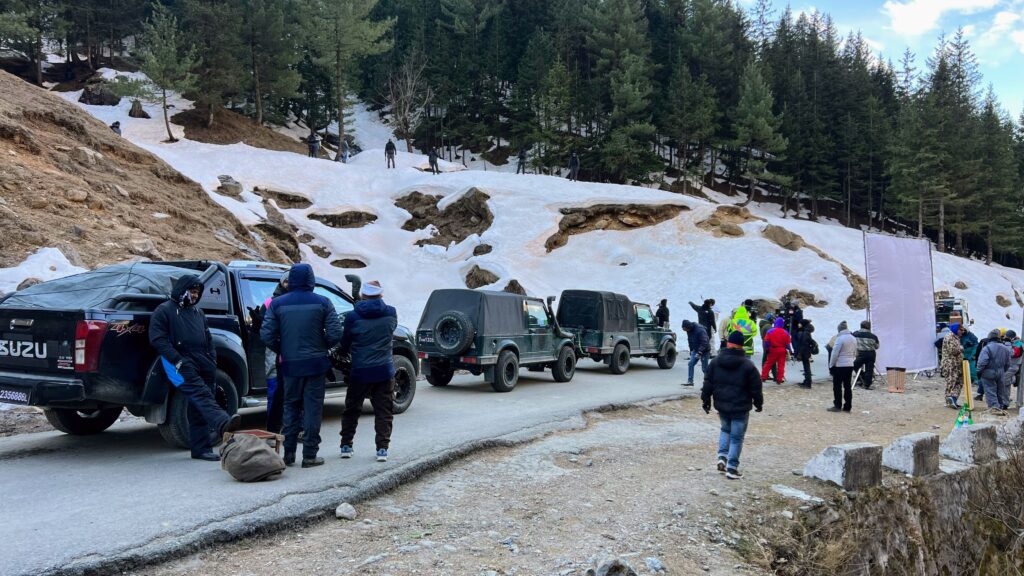
Sub-zero Himalayan winds howling through Sissu’s snow-capped peaks, a star-studded cast battling altitude and temperature extremes, and 15 days of production where every breath crystallizes in the air and every filming decision carries the weight of crew safety against creative ambition. Produced by Endemol Shine Indiain partnership with Lionsgate India, Directed by Rohan Khambati, the espionage thriller explores the action-adventure genre with a unique storyline that required authentic Himalayan locations where snow, isolation, and harsh conditions become integral to the narrative itself.
Line production for a 15-day winter shoot in high-altitude Himalayan locations demanded logistics expertise that merged mountain expedition planning with premium web series production requirements: securing winter-accessible accommodation in Sissu and Manali when many properties close for the season, coordinating specialized cold-weather equipment including heating systems for green rooms, camera weatherproofing for temperatures that can freeze electronic components, establishing medical support and evacuation protocols for altitude sickness and cold-weather injuries, managing transportation on snow and ice-covered mountain roads where standard vehicles become inadequate, implementing crew rotation schedules to prevent exhaustion and hypothermia during extended outdoor shooting days, and maintaining production timelines while accepting that in sub-zero conditions, everything from camera setups to talent preparation takes twice as long as normal. The location planning phase became critical to success: identifying shooting locations that balanced visual drama with accessibility, mapping backup indoor locations for weather contingencies, establishing communication networks in regions where cellular service becomes unreliable, and building relationships with local fixers who understand winter mountain logistics.
The project showcases Endemol Shine India’s commitment to premium content that pushes production boundaries, proof that with meticulous line production supporting ambitious creative vision, even the harshest filming environments can yield content that resonates with audiences hungry for stories that feel visceral, authentic, and impossible to ignore.
Production House: Endemol Shine India in partnership with Lionsgate India
Period: March 2023 (15-day principal photography)
Locations: Sissu, Manali (Himachal Pradesh)
Role: Line Producer – Winter High-Altitude Production Management & Location Planning
Genre: Espionage Thriller / Action-Adventure
Status: Yet to be released
let’s bring your vision to life in the himalayas
MAHINDRA THAR – CELEBRATING 100K
India’s most iconic off-road legend, battle-tested across endless kilometers of the country’s most punishing terrain, returning to the mountains that forged its reputation, Shimla’s pine-clad switchbacks, Kullu’s river valleys where civilization and wilderness blur, and Lahaul’s high-altitude moonscapes where roads become suggestions and survival becomes skill – to celebrate 100K Thars on road.
The production became a testament to what PowerDrift does best, merging automotive expertise with adventure storytelling, where the journey matters as much as the destination, and where every frame reminds viewers that India’s roads aren’t obstacles to overcome but stories waiting to be driven, filmed, and shared with communities who understand that vehicles aren’t just transportation, but vessels for transformation. Celebrating 100k Thars on Road is a narrative written in dust and mud and mountain passes, a story told through every terrain conquered, every challenge embraced, every moment when driver and machine become one entity dancing with geography. The Thar doesn’t just cross distances; it collects experiences, and somewhere in those collected miles lies the essence of what it means to truly explore.
Line production for automotive projects spanning multiple Himalayan regions demanded logistics choreography that merged expedition planning with professional filmmaking infrastructure: coordinating accommodation and catering for extended crew across remote mountain locations where “hotels” become relative concepts, managing vehicle support teams and backup equipment for a production shooting hundreds of kilometers from urban support systems, securing filming permits across diverse jurisdictions from Shimla’s accessible hill stations to Lahaul’s restricted border zones, establishing communication protocols in regions where cellular networks become unreliable memories, and maintaining flexible shooting schedules that could adapt when mountain weather ‘the ultimate director‘ rewrote production plans without consultation. The scale demanded anticipating challenges invisible to viewers: fuel logistics for support vehicles crossing regions where gas stations disappear for 150+ kilometer stretches, equipment weatherproofing against Himalayan altitude’s temperature extremes that swing 30+ degrees between dawn and noon, crew fatigue management during multi-week shoots at elevations where oxygen deprivation makes even simple tasks exhausting, and safety protocols for filming dynamic driving sequences on mountain roads where spectacular visuals and genuine danger occupy the same narrow corridor.
Production House: PowerDrift Studios
Period: March – April 2023
Locations: Shimla, Kullu, Lahaul (Himachal Pradesh)
Role: Line Producer – Large-Scale Mountain Production Management & Multi-Location Coordination
Featured: Mahindra Thar (100,000 km milestone vehicle)
‘kshamata’ – a short by Shoojit Sircar
Listen to this silence that speaks volumes: A young woman’s journey where “no” becomes invisible, inaudible, impossible, a narrative exploring consent, agency, and the profound courage required to reclaim one’s voice in a world that too often silences it. Produced by Rising Sun Films under the leadership of acclaimed director Shoojit Sircar, the visionary filmmaker behind critically acclaimed works like Vicky Donor, Piku, October, and Sardar Udham; the project represents Sircar’s continued commitment to character-driven narratives that explore complex social themes with nuance, empathy, and artistic integrity that challenges mainstream commercial cinema conventions.
The production brought together Rising Sun Films’ experienced creative team, with the company’s reputation for supporting bold, socially relevant storytelling that doesn’t sacrifice entertainment value for message, or message for entertainment, instead finding the intersection where both thrive. The project exemplifies Rising Sun Films’ commitment to cinema that matters; stories that don’t just entertain but illuminate, challenge, and ultimately transform both storytellers and audiences through the shared experience of witnessing truths too often left unspoken, proving that when meticulous line production supports fearless creative vision, even the most difficult stories can find their voice and resonate across communities hungry for narratives that reflect authentic human complexity.
Line production for a character-driven narrative exploring sensitive themes in Palampur required logistics management that understood both practical filmmaking needs and the emotional container required for cast and crew working with challenging subject matter: securing diverse location permissions across Palampur’s heritage properties, public spaces, and critically, Northern Railway infrastructure (a process demanding detailed safety protocols, insurance documentation, shooting schedules coordinated with train operations, and compliance with railway filming regulations that prioritize public safety and operational continuity), coordinating accommodation and production facilities for extended shoots in this smaller Himachal town where film production infrastructure differs significantly from metropolitan centers, managing equipment logistics including camera, lighting, and sound gear appropriate for the project’s intimate visual style, establishing communication protocols between production departments to ensure creative vision translated seamlessly through technical execution, and creating set environments where actors could access vulnerable emotional states while feeling supported and safe throughout the filming process. The Northern Railway permissions became particularly significant, railway locations carry symbolic weight in Indian cinema, representing transitions, journeys, and liminal spaces between past and future, making them narratively powerful but logistically complex filming environments that require specialized expertise in navigating government bureaucracy and safety regulations.
Production House: Shoojit Sircar/Rising Sun Films
Period: July – August 2022
Location: Palampur, Himachal Pradesh
Role: Line Producer – Creative & Technical Production Management, Railway Permissions Coordination
Special Logistics: Northern Railway Filming Permissions Secured
jeep meridian photoshoot
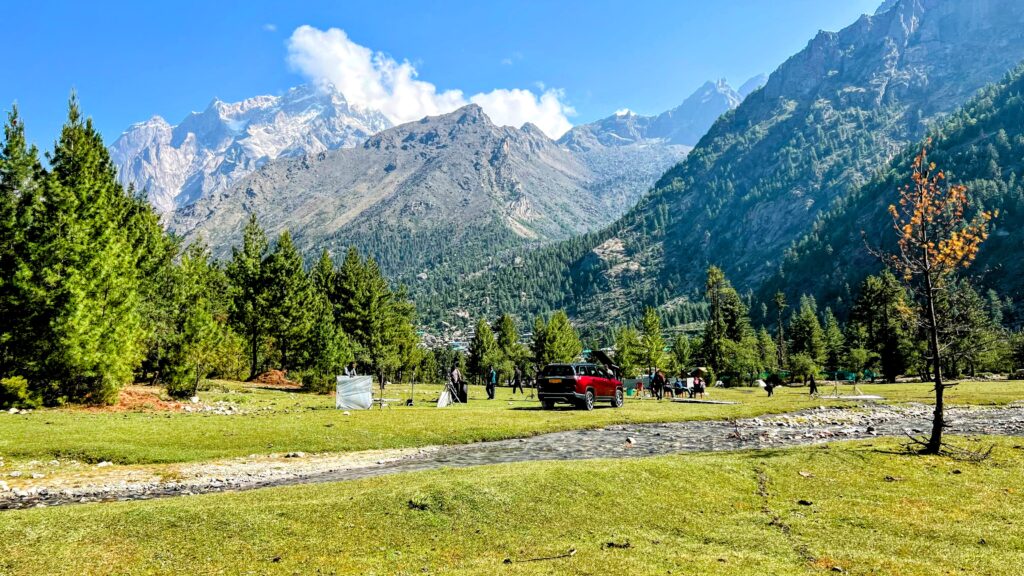
The Jeep Meridian – a seven-seater luxury SUV engineered for both urban sophistication and off-road capability; positioned against Sangla Valley’s dramatic backdrop where the Baspa River carves through pine forests, where Kinnaur’s apple orchards meet ancient Himalayan rock formations, and where every angle reveals another composition that makes automotive photographers’ hearts race.
The photoshoot represented PowerDrift Studios’ maturation from content creators to full-service production partners capable of delivering brand campaigns that don’t just showcase products but embed them within narratives and geographies that make audiences feel rather than simply see, proof that when meticulous line production aligns with creative excellence and brand vision, automotive photography transcends commercial necessity to become art that makes viewers stop scrolling, lean closer, and whisper to themselves: “I need to drive that, there, now”.
Line production for high-energy automotive photography in Sangla Valley required logistics expertise distinct from video production, photoshoots demand different rhythms, where hours might be invested in single compositions waiting for perfect light, vehicle positioning becomes millimeter-precise choreography, and the entire production team’s energy focuses on creating moments rather than motion: coordinating vehicle transport to remote shooting locations accessible only via narrow mountain roads where turning radius becomes critical consideration, managing equipment logistics including specialized automotive photography gear (polarizing filters, graduated neutral density filters, lighting rigs that can illuminate seven-seater SUVs against vast Himalayan backdrops). Sangla Valley offered unique advantages: its relative accessibility compared to more remote Himalayan regions, its diverse shooting locations compressed within manageable geography (river valleys, pine forests, mountain passes, traditional Kinnauri architecture), and its July timing when landscapes explode with green vitality that photographs as lush prosperity rather than harsh survival.
Production House: PowerDrift Studios
Period: July 2022
Location: Sangla Valley, Himachal Pradesh
Role: Line Producer – High-Energy Photoshoot Production Coordination & Brand Vision Alignment
Client: Jeep India – Meridian SUV Campaign
‘gulab’ – feature film by Sanjoy Nag
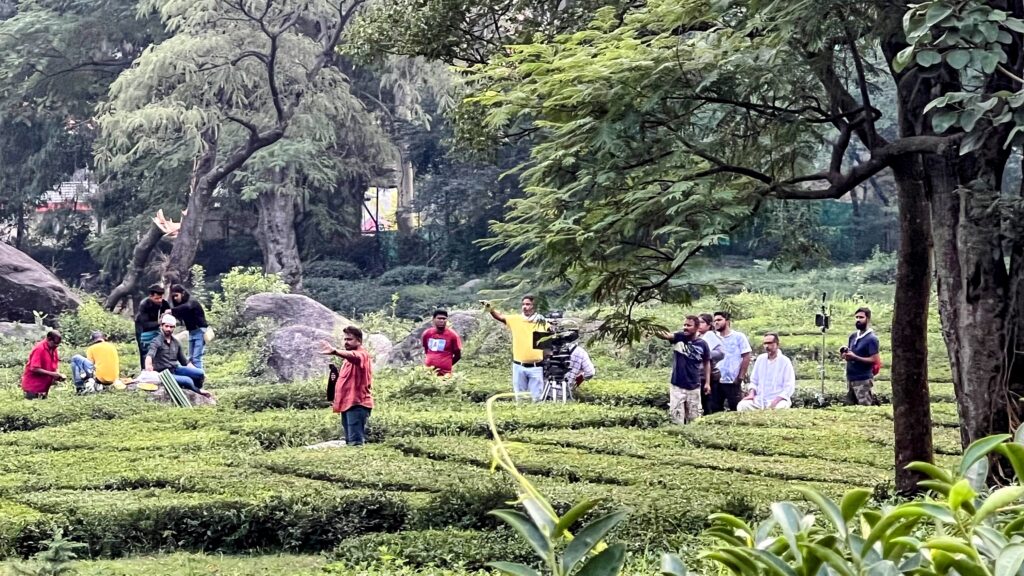
A narrative adapted from Annie Zaidi’s literary work, where names carry weight, where identity becomes destiny, and where human complexity unfolds against Palampur’s pastoral beauty, tea gardens stretching toward distant peaks, colonial architecture whispering histories of empire and independence, and landscapes that mirror the protagonist’s internal journey between tradition and transformation. Director Sanjoy Nag, the acclaimed Bengali filmmaker known for Memories in March and other critically praised works exploring intimate human stories with visual sophistication and narrative nuance, adapted Annie Zaidi’s source material into a screenplay that examines identity, displacement, and belonging through contemporary Indian contexts.
Produced by Endemol Shine India in partnership with Ten Years Younger Productions, Gulab represents Endemol Shine’s strategic expansion from television production dominance into feature film territory, developing a slate of South Asian director-driven cinema targeting digital release platforms that hunger for character-driven narratives with cultural specificity and universal emotional resonance. The cast included Vardhan Puri, Tanya Maniktala, Paoli Dam, Ujjawal Chopra and Rahul Bagga.
The film made its world premiere at the 14th Annual Chicago South Asian Film Festival in September 2023, signaling Endemol Shine’s ambition to create content that travels beyond domestic markets to engage global diaspora audiences hungry for stories that reflect authentic South Asian experiences without exoticization or stereotype.
The project maintained the production values that characterize Endemol Shine’s reputation for technical excellence, with Palampur’s distinctive geography, positioned in Himachal’s Kangra Valley with views of the Dhauladhar range, providing both practical production advantages (accessibility, infrastructure, varied locations within compact geography) and aesthetic richness that elevates intimate character drama through landscape that functions as both setting and symbol.
Line production for feature film production in Palampur required logistics management distinct from television or commercial work, features demand sustained creative focus over compressed shooting schedules where every day counts financially and creatively: securing diverse location permissions across Palampur’s mix of heritage properties, tea estates, residential areas, and public spaces (each requiring different permission protocols and coordination with property owners, local authorities, and community stakeholders), coordinating accommodation for cast and crew during the May-June 2022 shooting period when Palampur experiences pleasant weather but also tourist season competition for hotels, managing equipment logistics including camera packages, lighting gear, grip equipment, and specialized tools appropriate for the film’s visual style, establishing efficient transportation systems that move people and equipment between locations on schedules where delays cascade into budget overruns, coordinating department heads (cinematography, art direction, costume, sound) to ensure their creative visions aligned with directorial intent and practical constraints, implementing catering and craft services that maintain crew energy and morale during long shooting days, and creating set environments where actors could maintain character continuity across shooting schedules that rarely follow narrative chronology. The meticulous planning phase became critical to successful execution, scouting locations months in advance, creating detailed shot lists and shooting schedules that maximized efficiency, establishing backup plans for weather contingencies, building relationships with local fixers who understand Palampur’s logistical realities, and maintaining constant communication between production departments to anticipate and solve problems before they disrupted filming.
Production management became an exercise in meticulous planning that honored both creative ambition and practical execution – delivering comprehensive production planning for director Sanjoy Nag’s vision, ensuring all logistical elements from accommodation to equipment to location permissions seamlessly supported the creative process, coordinating technical departments including camera, sound, art direction, and costume to maintain visual and narrative coherence, managing the complex dynamics of feature film production where shooting schedules compress weeks of story into efficient daily shot lists, and creating production environments where cast including Vardhan Puri, Tanya Maniktala, Paoli Dam, Ujjawal Chopra and Rahul Bagga could access emotional depths their characters demanded while maintaining the momentum required for on-schedule, on-budget delivery.
Production House: Endemol Shine India, Ten Years Younger Productions
Period: May – June 2022 (Principal Photography)
Location: Palampur, Himachal Pradesh
Director: Sanjoy Nag
Based On: Book by Annie Zaidi
Cast: Vardhan Puri, Tanya Maniktala, Paoli Dam, Ujjawal Chopra, Rahul Bagga,
Role: Line Producer – Feature Film Production Planning & Logistics Management
Status: World Premiere at Chicago South Asian Film Festival 2023; Theatrical/Digital Release Pending
firefox bikes – mountain biking
Carbon fiber frames slicing through Himalayan switchbacks, riders and machines becoming one fluid entity dancing with gravity on descents where Shimla’s colonial roads give way to Narkanda’s raw mountain trails, and every frame captures the pure adrenaline rush that transforms cycling from transportation into transcendence. As line producer for PowerDrift Studios’ Firefox Bikes branded content in July 2021, production management became the orchestration of high-energy action cinematography across multiple locations, producing high-quality, action-oriented branded content.
Gravity becomes conversation partner, mountains transform into playgrounds, and the distance between who you are and who you could be shrinks to nothing, just you, the trail, and a machine engineered to amplify every ounce of courage you possess. Experience the transformative joy of mountain cycling through cinematography that makes heart rates accelerate even from couches.
Line production for action-oriented cycling content across diverse Himalayan and urban locations required logistics expertise spanning multiple production disciplines: coordinating professional rider talent whose cycling skills allowed filming dynamic sequences without excessive takes that exhaust athletes and burn daylight, managing equipment logistics including specialized camera rigs (gimbals, drones, vehicle-mounted tracking systems adapted for cycling speeds), securing location permissions across Shimla’s municipal jurisdictions, Narkanda’s forest department territories, and Chandigarh’s urban filming regulations (each requiring different permit processes and coordination with authorities), establishing safety protocols for high-speed downhill filming where riders push limits and camera crews position themselves in potentially hazardous locations to capture compelling angles, coordinating weather monitoring during July’s monsoon season when mountain weather patterns shift unpredictably and rain transforms dirt trails from rideable to dangerous within minutes, managing crew accommodation and transportation across three distinct locations with different infrastructure levels (Shimla’s established tourism facilities, Narkanda’s limited mountain accommodations, Chandigarh’s urban hotel options), and maintaining timeline discipline where client deliverables demanded on-schedule completion despite weather contingencies and the inherent unpredictability of action sports filming where perfect takes depend on athlete performance, equipment functionality, and lighting conditions aligning simultaneously. The multi-location approach provided narrative and visual diversity, Shimla offered colonial architecture and urban mountain aesthetics, Narkanda delivered serious mountain biking terrain with technical trails and dramatic elevation changes, Chandigarh provided urban cycling contexts that showed Firefox bikes’ versatility beyond pure adventure applications.
Production House: PowerDrift Studios
Period: July 2021
Locations: Shimla, Narkanda (Himachal Pradesh), Chandigarh
Role: Line Producer – Action Sports Production Management & Multi-Location Crew Coordination
Client: Firefox Bikes – Branded Content Campaign
royal enfield – all roads/no roads
This is Royal Enfield’s essence distilled into pure visual poetry across landscapes where India dissolves into Tibet, where oxygen thins and spirit soars, where every frame whispers the brand’s timeless promise: “Made like a gun, goes like a bullet”. Produced by ‘Wondrlab’, the Mumbai-based creative agency and production house known for brand campaigns that merge strategic thinking with artistic execution, the Royal Enfield project demanded understanding not just of motorcycle culture but of the deep emotional connection Royal Enfield owners feel toward their machines—a relationship that borders on spiritual and demands content that respects that reverence while amplifying it through cinematography that makes non-riders understand the magnetic pull of open roads and Himalayan horizons.
Line production for a Royal Enfield brand campaign in remote Kinnaur during peak winter required logistics expertise that merged expedition planning with commercial production standards: coordinating motorcycle transport to locations accessible only via narrow mountain roads where January ice and potential snow create genuine hazards, managing rider talent capable of handling Royal Enfield’s unique riding characteristics in challenging conditions while maintaining the smooth, confident riding style that photographs well, securing filming permissions across multiple jurisdictions including forest department territories, army-regulated border zones near Pooh, and local community permissions in villages like Kalpa where tourism and filming require cultural sensitivity, establishing equipment weatherproofing protocols for camera gear exposed to sub-zero temperatures that drain batteries rapidly and cause condensation issues when moving between cold exteriors and heated interiors, coordinating accommodation in Kinnaur’s limited winter hospitality infrastructure where many properties close seasonally and heating becomes critical for crew welfare, managing backup plans for weather contingencies where snowfall could close roads completely and force either production delays or creative pivots to alternative locations, and maintaining the aesthetic authenticity that Royal Enfield demands—this isn’t aspirational luxury content but rugged reality content where mud, cold, and genuine challenge become selling points rather than problems to avoid. The multi-location approach across Daranghati, Kalpa, and Pooh provided visual and narrative diversity; each location offering distinct character from hidden valleys to monastery-crowned peaks to stark border landscapes; allowing the campaign to showcase Royal Enfield motorcycles’ versatility across terrain types while maintaining thematic coherence around exploration, endurance, and the transformative power of motorcycle journeys that push beyond comfort zones into territories where self-discovery happens not despite difficulty but because of it.
Production House: Wondrlab
Period: January 2021 (Winter Production)
Locations: Daranghati, Kalpa, Pooh (Kinnaur District, Himachal Pradesh)
Role: Line Producer – Brand Campaign Production Management & Winter High-Altitude Logistics
Client: Royal Enfield – Brand Campaign
hyundai i-20 n line, sound & handling film
Feel the G-forces build through 21 hairpin bends: The Gata Loops engineering marvel where the Manali-Leh Highway climbs 3,000 vertical feet through serpentine switchbacks that carve impossibility into mountain faces, where each of 21 consecutive hairpins offers fresh perspective on what happens when human ambition meets geological reality, and where the perfect vehicle for showcasing hot hatch agility meets the perfect landscape for demonstrating that performance isn’t just straight-line speed but the dance of chassis dynamics through corners that never end.
In August 2021, production management became the execution of sleek, performance-driven content at 15,000+ feet elevation, highlighting the vehicle’s sporty design language and N Line performance features through dynamic high-altitude cinematography that captured both the i20’s aggressive aesthetics (contrast red accents, twin exhaust tips, N Line badging) and its driving character across landscapes where oxygen deprivation affects both engines and humans, coordinating filming logistics on one of India’s most iconic motorcycle routes where every curve photographs as automotive art and every vista provides backdrop that makes viewers forget they’re watching branded content, managing crew safety at altitudes where acute mountain sickness becomes genuine concern and where weather systems shift from sunshine to snowstorm with terrifying speed, and delivering production that aligned with Hyundai’s positioning of the i20 N Line as the accessible performance option for enthusiasts who want hot hatch character without exotic car budgets or compromises.
Line production for performance-focused automotive content at the Gata Loops required logistics expertise addressing unique high-altitude challenges: coordinating altitude acclimatization protocols for crew members traveling from sea-level environments to 15,000+ feet where oxygen saturation drops to roughly 60% of normal and altitude sickness symptoms including headaches, nausea, and fatigue can debilitate team members unused to elevation, managing vehicle preparation including fuel octane considerations (high altitude reduces effective octane ratings), tire pressure adjustments for elevation and temperature variations, and mechanical inspection ensuring the i20 could deliver repeated high-performance runs without issues, securing filming permissions for the Manali-Leh Highway, a strategic military route where civilian access is controlled and filming requires coordination with Border Roads Organisation (BRO) and local military authorities who prioritize convoy movements and security over commercial filming, establishing equipment logistics including camera stabilization systems for capturing smooth tracking shots on rough mountain roads, drone operations complying with altitude restrictions and no-fly zones near military installations, and backup power systems because high altitude drains batteries at accelerated rates, coordinating weather monitoring during August, typically favorable in Ladakh’s rain-shadow but never guaranteed, where sudden weather deterioration can make the Gata Loops impassable and dangerous within hours, managing crew welfare including oxygen supplementation for team members experiencing altitude issues, proper cold-weather gear for locations where August temperatures still drop near freezing at dawn, and evacuation protocols should anyone develop serious altitude sickness requiring immediate descent to lower elevations, and maintaining shooting schedules that worked around daily military convoy timings when civilian traffic halts completely for hours. The Gata Loops location provided unparalleled visual drama—21 consecutive switchbacks visible simultaneously from elevated vantage points create compositions that celebrate both engineering (the road itself as achievement) and performance (the vehicle navigating it with precision and poise).
Production House: PowerDrift Studios
Period: August 2021
Location: The Gata Loops, Manali-Leh Highway (Ladakh)
Role: Line Producer – High-Altitude Performance Campaign Production & Mountain Logistics
Client: Hyundai India – i20 N Line Launch Campaign
Tata Safari Adventure
India’s iconic Safari nameplate reborn, a three-row SUV that carries the heritage of adventures past while embracing contemporary sophistication, tested across terrains where Palampur’s tea garden serenity meets Pong Wetland’s wild expanses, where migratory birds from Siberia witness vehicular capability meeting geographical diversity, and where every sequence captures the duality that defines modern adventure vehicles: refined enough for school runs yet capable enough for off-road escapades that reconnect families with landscapes beyond suburbs.
Line production for high-action automotive content across Palampur’s diverse terrain required logistics expertise that understood both vehicular cinematography and environmental sensitivity: coordinating vehicle preparation including proper off-road tires, underbody protection, and mechanical inspection ensuring the Safari could handle planned sequences without mechanical failures that derail shooting schedules, managing location permissions across Palampur’s mix of private tea estates (requiring landowner coordination), public roads (requiring traffic management during filming), and Pong Wetland territories (requiring forest department and wildlife authorities’ permissions that prohibit activities disturbing migratory birds during February’s peak birding season), securing professional driver talent capable of executing dynamic driving sequences that showcase capability while maintaining safety margins and avoiding environmental damage in sensitive wetland ecosystems, establishing equipment logistics including camera cars/rigs for tracking shots, drones for aerial perspectives that reveal landscape scale, and specialized mounting systems that capture in-vehicle perspectives showing driver and passenger experiences, coordinating weather monitoring because February in Himachal offers generally favorable conditions but occasional weather systems can bring rain that transforms off-road sequences from exciting to impossible, managing crew welfare including accommodation in Palampur’s boutique hotels and heritage properties that offer proximity to shooting locations, and maintaining the delicate balance between “adventurous” and “reckless” in action sequences, content that excites without suggesting dangerous driving behaviors that could create liability concerns for Tata Motors or encourage unsafe consumer behavior. The dual-location strategy leveraging both Palampur’s structured agricultural landscape and Pong Wetland’s wild character provided narrative progression, from civilization to wilderness, from controlled to spontaneous, from everyday to extraordinary, mirroring the journey Tata Safari promises its owners.
Production House: PowerDrift Studios
Period: February 2021
Locations: Palampur, Pong Wetland (Himachal Pradesh)
Role: Line Producer – High-Action Campaign Production & Off-Road Sequence Coordination
Client: Tata Motors – Safari Adventure Campaign
your reliable & responsible line producer & production management crew in himachal pradesh, ladakh, uttarakhand “HIMALAYAS”
SPIKE – A SPORTS DRAMA – WEB SERIES
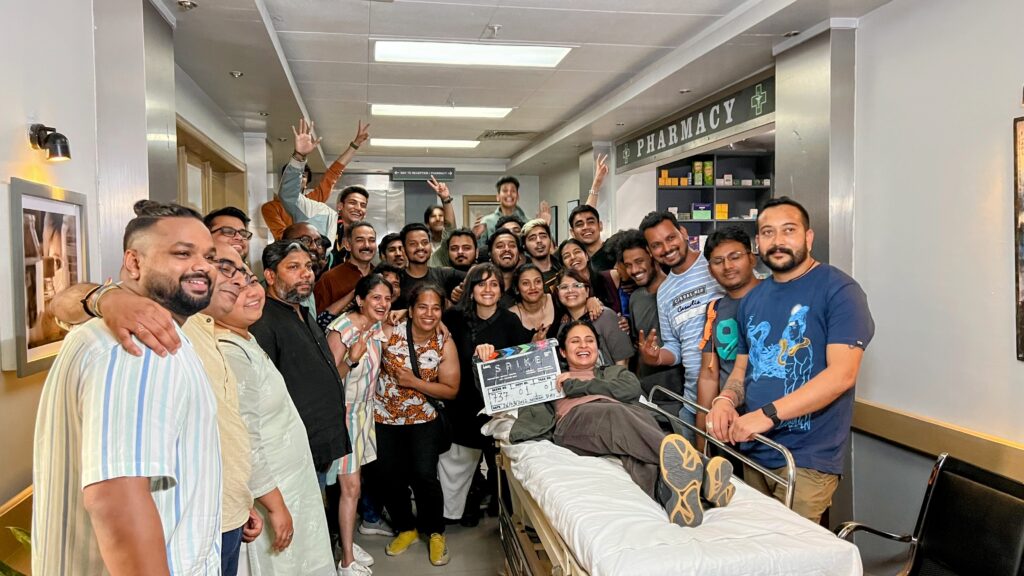
A volleyball arcing against Dhauladhar peaks, dreams spiked across nets strung between tradition and ambition, and young athletes discovering that sports aren’t escape from life but preparation for it, this is Spike, a large-scale sports drama where the underdog narrative meets Himachal’s breathtaking geography, where coming-of-age storytelling collides with athletic intensity, and where a year-long production journey transformed Palampur from quiet hill town into the epicenter of India’s most ambitious volleyball series.
Produced by Imber Media in partnership with Endemol Shine India, the series developed ensemble character dynamics exploring themes universal to sports drama, talent versus hard work, individual ambition versus team success, traditional expectations versus unconventional dreams, filtered through volleyball’s unique culture where height disadvantages, gender dynamics, and team chemistry create narrative complexity beyond simple win/loss binaries. The cinematography captured both intimate character moments and explosive athletic action, with volleyball’s vertical dynamics (spikes, blocks, dives) providing visual spectacle distinct from cricket or football’s horizontal gameplay, while Palampur’s locations, from Agriculture University’s structured campus environments to Parashar Lake’s mystical mountain setting, offered production value elevating the series beyond generic sports drama into something cinematically distinctive.
Spike represents the evolution of Indian web series production toward international standards, projects conceived with cinematic ambition, executed with professional rigor, and designed for audiences whose streaming platform exposure has elevated expectations beyond what television traditionally delivered, proving that when comprehensive line production supports bold creative vision across extended timelines and substantial budgets, Indian content can compete globally not through imitation but through authentic stories told with universal emotional resonance and production values that respect audience sophistication.
Line production for a year-long, large-scale sports drama during pandemic uncertainty required logistics mastery addressing unprecedented challenges: managing pre-production during 2021’s devastating COVID-19 second wave when lockdowns closed offices, halted travel, and created bureaucratic paralysis, yet permissions, casting, location scouting, and scheduling had to continue through virtual coordination and relationship leverage with authorities understanding production’s economic importance to Palampur’s tourism-dependent economy, establishing COVID-19 safety protocols including regular testing, bio-bubble accommodations segregating cast/crew from public interaction, isolation facilities for positive cases, and coordination with local health authorities ensuring production compliance with evolving pandemic regulations, coordinating casting processes for sports drama requiring actors who could credibly perform volleyball sequences—either casting athletes who could act or actors who could train intensively, plus coordinating volleyball consultants/coaches ensuring technical authenticity that sports-savvy audiences demand, managing scheduling across 12 months balancing actor availability (ensemble casts mean complex calendar Tetris), weather windows (monsoons limiting outdoor filming, winter affecting Parashar Lake accessibility), location availability (Agriculture University’s academic calendar restricting campus access during examination periods), and production momentum (maintaining creative continuity across extended timelines where cast/crew turnover and creative evolution challenge consistency), securing location permissions across diverse jurisdictions, Agriculture University requiring institutional approvals, Parashar Lake involving forest department and religious authority coordination (the lake holds spiritual significance requiring cultural sensitivity), Palampur town locations needing municipal permissions and community relations, coordinating equipment logistics for sports filming requiring specialized gear including high-speed cameras capturing volleyball’s explosive moments, lighting packages for indoor court sequences demanding broadcast-quality illumination, stabilization systems for dynamic tracking shots following gameplay, and audio equipment capturing both dialogue and the distinctive sounds (ball impacts, shoes squeaking, crowd reactions) that create sports drama’s visceral authenticity, managing crew welfare across year-long production including accommodation in Palampur’s limited hospitality infrastructure, catering maintaining morale during extended shoots, transportation between multiple locations, and mental health support for teams working intense schedules far from home during pandemic isolation, and maintaining budget discipline across substantial production spending where cost overruns on year-long schedules compound exponentially, requiring constant monitoring, creative problem-solving when challenges arise, and communication with producers balancing creative ambitions against financial realities.
Production House: Imber Media and Endemol Shine India
Period: March 2021 – March 2022 (12-month production)
Locations: Agriculture University Palampur, Parashar Lake, Palampur and Surroundings (Himachal Pradesh)
Role: Line Producer – Comprehensive Pre-Production, COVID-19 Era Permissions, Multi-Terrain Logistics, Creative-Operations Bridge
Genre: Sports Drama – Volleyball
Production Scale: Large-scale, substantial budget
Status: Post-Production/Awaiting Release
mtv roadies revolution – season 18
Imagine orchestrating cultural phenomenon: Three hundred crew members converging on Rishikesh where the Ganges roars through Himalayan foothills, cameras rolling on India’s longest-running reality show as it enters its 17th season hunting for young revolutionaries willing to transform zeal into social change, and a 40-day reconnaissance mission across North India culminating in locations so iconic they become characters themselves, from Rishikesh’s spiritual rapids to Rewalsar Lake’s sacred waters, from Punjab’s heritage Kikar Lodge to Himachal’s time-capsule village Garli Paragpur.
Produced by Colosceum Media for Viacom18’s MTV India, Roadies Revolution represented the seventeenth iteration of a franchise that had evolved from cult favorite into cultural institution, with Season 17 achieving 37% growth in television viewership, 55% increase in digital streaming on Voot, and 40 million views of exclusive online content, numbers demonstrating Roadies’ unique position straddling traditional broadcast and digital ecosystems. Hosted by Rannvijay Singh, Roadies’ original 2004 winner who had become the show’s spiritual compass and face across 17 seasons, the series featured gang leaders Prince Narula, Nikhil Chinapa, Neha Dhupia, and rapper Raftaar (later replaced mid-season by Varun Sood), each bringing distinct personalities and strategic approaches that created the interpersonal drama fueling audience engagement beyond physical challenges. Season 17 innovated by eliminating gang structures entirely, forcing contestants into solo competition from the start, a format shift reflecting the season’s revolutionary theme where individual agency and social consciousness mattered more than tribal loyalty.
The production represented television at industrial scale, with episode releases extending from the February 15, 2020 premiere through December 2020 as the show navigated COVID-19’s six-month production halt before returning with digitally auditioned wildcard contestants and modified formats acknowledging pandemic realities.
Line production for Roadies Revolution at 300-person crew scale across multiple states required logistics mastery addressing television production’s unique demands: conducting the 40-day reconnaissance phase evaluating hundreds of potential locations across Uttarakhand, Punjab, and Himachal Pradesh, assessing each site’s visual appeal, accessibility for massive crew movements, accommodation capacity in often-remote areas, permit feasibility, challenge construction possibilities, and safety considerations for stunts ranging from whitewater activities in Rishikesh to endurance tasks at altitude, coordinating travel logistics moving 300 people plus equipment trucks between locations on schedules where delays affect expensive per-day costs for such massive crews, establishing transportation fleets, managing load-in/load-out procedures, coordinating with local traffic authorities for convoy movements, managing crew coordination across specialized departments where camera operators, sound technicians, challenge builders, safety divers, medical teams, production designers, wardrobe, makeup, catering, and production management all required simultaneous coordination with clear communication protocols preventing the chaos that naturally accompanies 300 people working toward shared deadlines, planning and executing adventure activities that provided television spectacle while maintaining participant safety, coordinating with adventure sports experts for tasks involving river crossings, rope courses, endurance challenges, and physical competitions where entertainment value had to be balanced against duty of care for contestants whose injuries could trigger legal liability and production shutdowns, securing comprehensive location permissions across multiple state jurisdictions (Uttarakhand, Punjab, Himachal Pradesh) each with different bureaucratic processes, coordinating with tourism departments, forest authorities for natural locations like Rewalsar Lake, heritage site managers for properties like Kikar Lodge and Garli Paragpur village, local police for crowd control and security, and municipal authorities for urban filming, managing accommodation logistics housing 300 crew members across locations with varying infrastructure, from Rishikesh’s established tourism facilities to more remote Himachal locations where hotel capacity required booking entire properties or establishing temporary accommodation camps, coordinating equipment logistics including broadcast-quality camera packages, specialized adventure filming gear (waterproof housings, drone units, helmet cameras), lighting for both day and night shoots, audio systems capturing clear dialogue amid chaotic challenge environments, and grip equipment supporting camera positions from river banks to cliffsides, establishing medical and safety protocols for reality television involving genuine physical risk, coordinating with paramedics, safety supervisors, and insurance providers ensuring contestant welfare while capturing authentic adventure content…………….
………………and then, in March 2020, navigating the unprecedented challenge of COVID-19 shutdown, making the difficult decision to cancel final shooting days including the planned Wagah Border climax, demobilizing 300-person crew amid lockdown confusion, protecting cast and crew health while managing contractual obligations with sponsors and broadcasters expecting content delivery.
MTV Roadies Revolution exemplified reality television production at its most ambitious and complex a scale requiring line production expertise managing logistics rivaling feature film productions while maintaining the spontaneity and authenticity that makes reality television compelling, proving that even when global pandemics force premature endings, meticulous production management creates frameworks where creative visions can flourish and cultural phenomena can continue inspiring generations of young Indians who see Roadies not as television but as aspirational lifestyle defining courage, adventure, and the revolutionary spirit to challenge comfortable existence.
Production House: Colosceum Media, for Viacom18/MTV India
Period: February – March 2020 (Production halted due to COVID-19 pandemic)
Locations: Rishikesh (Uttarakhand), The Kikar Lodge Ropar (Punjab), Garli Paragpur, Mandi, Rewalsar Lake (Himachal Pradesh)
Host: Rannvijay Singh
Gang Leaders: Prince Narula, Nikhil Chinapa, Neha Dhupia, Raftaar/Varun Sood
Role: Line Producer – 300-Person Crew Coordination, Multi-State Travel Logistics, Adventure Activity Planning, Overall Production Management
Production Scale: 40-day reconnaissance, 300-person crew, multi-state locations
Premiere: February 15, 2020 on MTV India and Voot
executing & powering landmark productions in the himalayas
the great escape – season 3
Vishal Dadlani, India’s renowned music composer and rock vocalist and Sarah Jane Dias, actress, model, and effervescent television personalityabandoning Mumbai’s urbane comforts for Himachal Pradesh’s remote wilderness, where travel becomes not just movement through space but evolution through experience, where interior Himachal’s hidden treasures reveal themselves to cameras capturing authentic wonder rather than staged tourism, and where adventure sports sequences transform hosts from celebrities into vulnerable humans rediscovering awe.
Produced by Endemol Shine India, The Great Escape represented premium lifestyle television targeting urban audiences hungry for vicarious adventure and travel inspiration, content that balanced aspiration with accessibility, showing destinations that felt simultaneously exotic and achievable for viewers planning their own escapes from metropolitan routines. Hosted by Vishal Dadlani, one half of the legendary Vishal-Shekhar composing duo behind Bollywood’s biggest musical hits and frontman of rock band Pentagram, alongside Sarah Jane Dias, whose Miss India Universe background and acting career gave her recognizable star power while her genuine curiosity and adventurous spirit made her relatable rather than distant, the duo’s chemistry and authentic reactions elevated the show beyond typical travel television’s forced enthusiasm into something that felt like traveling with charismatic friends who happen to have camera crews documenting their adventures. Season 3’s focus on interior Himachal Pradesh, moving beyond well-trodden tourist circuits of Manali and Dharamshala into lesser-known gems like Tirthan Valley’s pristine ecology, Parashar Lake’s mystical mountain setting, Chamba’s heritage architecture, and Pong Wetland’s avian paradise, provided the exploratory spirit distinguishing The Great Escape from conventional travel shows that recycle familiar destinations.
Line production for multi-location travel television across interior Himachal’s diverse terrain required logistics expertise addressing unique challenges: managing safety for adventure sport sequences where hosts with varying athletic abilities participated in activities ranging from paragliding in Bir-Billing to trekking toward Parashar Lake at altitude, coordinating with certified adventure operators, establishing safety protocols, securing proper insurance, having medical support readily available, and maintaining equipment that protected hosts while allowing cameras to capture their genuine experiences and reactions, coordinating transportation logistics moving cast, crew, and equipment across seven locations with varying accessibility from Shimla’s well-connected roads to Parashar Lake requiring the final approach via steep trekking trails where equipment had to be carried manually, from Narkanda’s mountain highway accessibility to Tirthan Valley’s narrower roads requiring smaller vehicles, establishing vehicle fleets appropriate for mountain terrain while maintaining equipment safety during transport, streamlining production workflows across remote locations where conventional production infrastructure (equipment rental houses, post-production facilities, 24-hour support services) didn’t exist, requiring comprehensive pre-production planning that anticipated needs rather than reacting to problems, bringing backup equipment for critical failures, establishing communication systems in areas with unreliable cellular coverage, and creating flexible shooting schedules that could adapt when weather, adventure activity timing, or unforeseen challenges disrupted plans, managing accommodation logistics across locations with varying hospitality infrastructure, from Shimla’s established hotels to more remote areas requiring homestays, guesthouses, or camping arrangements for crew, ensuring accommodation quality supported crew welfare during the demanding May-June shooting period when pre-monsoon heat in lower elevations and still-cold temperatures at higher altitudes created comfort challenges, coordinating with local communities, tourism boards, and heritage site managers for filming permissions across diverse jurisdictions, Shimla’s municipal authorities, forest department permissions for Tirthan Valley and Parashar Lake protected areas, Pong Wetland’s wildlife sanctuary regulations, Chamba’s heritage site access, and Amritsar’s religious and civic permissions for filming at Golden Temple and other iconic locations, managing the production’s immersive travel show format that required capturing not just beautiful visuals but authentic host reactions, spontaneous moments, local character interactions, cultural experiences, and adventure sequences that together created narrative arcs within episodes rather than merely location montages, requiring directors and producers to balance planned sequences with openness to serendipitous moments that make great travel television, and maintaining production momentum across six weeks of continuous shooting where crew fatigue, equipment wear, and the psychological challenges of extended location work in remote areas required morale management, efficient scheduling that balanced work intensity with rest, and leadership that kept teams motivated toward shared creative goals.
Production House: Endemol Shine India for Fox Life
Period: May – June 2018
Locations: Shimla, Narkanda, Tirthan Valley, Parashar Lake, Pong Wetland, Chamba, Amritsar (Himachal Pradesh & Punjab)
Hosts: Vishal Dadlani, Sarah Jane Dias
Role: Line Producer – Multi-Location Travel Production, Adventure Sport Safety Management, Remote Terrain Logistics
Format: Immersive Travel & Adventure Series
parchayee – ghost stories by ruskin bond
Colonial-era bungalows where shadows hold secrets, remote Himalayan rest houses where the past refuses to remain buried, and period architecture in Shimla, Chail, and Chabba transformed into portals between the living and the spectral, this is Parchayee, where India’s most beloved author’s handpicked tales of mystery, melancholy, and the supernatural found their first digital adaptation.
Produced by Banijay Asia, the 12-episode anthology series, required production approaches respecting the author’s “simple storytelling blended with interesting characters in unusual settings, prose that captivates through atmosphere and emotional resonance rather than shock value. The series launched ZEE5 into horror-thriller territory with content targeting audiences who grew up with Ruskin Bond’s books, now ready to experience beloved tales reimagined for digital platforms with production values and creative freedom unavailable in traditional television. Featuring ensemble cast including Sumeet Vyas, Isha Talwar, Anurita Jha, Naveen Kasturia, Gauhar Khan, and others across 12 distinct stories, each episode adapted Bond’s handpicked tales including The Ghost in the Garden, The Wind on Haunted Hill, The Overcoat, Wilson’s Bridge, and eight additional stories spanning supernatural romance, vengeful spirits, cursed objects, and the permeable boundaries between mortality and whatever lies beyond. Director V.K. Prakash helmed episodes including The Ghost in the Garden and The Wind on Haunted Hill, while acclaimed director Aniruddha Roy Chowdhury (known for Pink starring Amitabh Bachchan) directed Wilson’s Bridge and The Overcoat, bringing distinct directorial visions united by commitment to atmospheric tension over jump scares, psychological unease over gore, and emotional truth over sensationalism. The series released in Hindi with dubbed versions in Kannada, Malayalam, Tamil, and Telugu, extending Bond’s literary reach across India’s linguistic diversity through January-June 2019 episodic releases that built anticipation between installments.
Line production for period supernatural content across remote Himachal locations during winter required logistics expertise balancing creative authenticity with practical execution: managing precise location scouting and coordination across Shimla, Chail, and Chabba’s heritage properties, identifying colonial-era bungalows, isolated rest houses, and period architecture whose weathered elegance and geographical isolation provided authentic settings for Bond’s tales set in British India’s twilight and independent India’s early decades, securing permissions from property owners (many heritage structures privately owned or government-managed requiring special access), coordinating period-appropriate art direction where locations’ existing character needed minimal augmentation to transport viewers into Bond’s temporal settings, supporting casting processes for anthology format requiring different ensemble casts across 12 episodes, identifying actors through auditions, coordinating with casting directors, facilitating screen tests, and managing talent contracts for a format where each episode became essentially a short film with distinct characters rather than serialized narratives with recurring casts, coordinating equipment and crew logistics during November-December when Shimla, Chail, and Chabba experience cold temperatures, shorter daylight hours, and potential weather disruptions affecting shooting schedules, managing accommodation for cast and crew during winter season when some properties operate limited capacity, establishing heating for comfort during indoor sequences, weatherproofing equipment against cold and moisture, managing production workflows across four episodes filmed in these specific Himachal locations (the series’ 12 episodes shot across multiple locations with different production phases) coordinating director requirements, cinematography approaches capturing supernatural atmosphere through lighting design, camera angles, and compositional strategies that suggested unseen presences rather than explicit revelation, and maintaining production timelines delivering content meeting ZEE5’s release schedules while honoring creative vision that ghost stories require atmospheric patience rather than rushed filming.
Parchayee demonstrated that adapting beloved literary properties demands production approaches respecting source material while embracing visual storytelling’s unique possibilities, proof that when meticulous line production supports directorial vision, proper locations, and casting that honors characterization over star power, even India’s most gentle ghost story writer can haunt digital audiences with tales that linger not through fear but through melancholy recognition: we are all ghosts-in-waiting, and the boundaries separating us from eternity are gossamer-thin, permeable as Himalayan mist.
Production House: Banijay Asia and Opus Communication for ZEE5
Period: November – December 2018 (Principal Photography for Himachal Episodes)
Locations: Shimla, Chail, Chabba (Himachal Pradesh)
Based On: Stories by Padma Bhushan & Padma Shri awardee Ruskin Bond
Directors: V.K. Prakash, Aniruddha Roy Chowdhury (among others)
Cast: Sumeet Vyas, Isha Talwar, Anurita Jha, Naveen Kasturia, Gauhar Khan (ensemble across 12 episodes)
Role: Line Producer – Location Management, Resource Coordination, Casting Support (4 episodes in Himachal)
Format: 12-Episode Horror-Thriller Anthology Series
Release: January 15, 2019 (ZEE5) – Episodes released through June 2019
Languages: Hindi (original) with dubbed versions in Kannada, Malayalam, Tamil, Telugu
the great escape – season 2
Feel the road unfold like destiny: Two childhood friends, Kunal Kapoor, the Bollywood actor known for intense dramatic roles from Rang De Basanti to Veeram, and Cyrus Sahukar, the beloved VJ-turned-actor whose wit and everyman charm made him MTV India’s face for a generation, reuniting not on film sets but on the Shimla-Kaza Highway, that legendary serpentine route threading through Spiti Valley where civilization dissolves into lunar landscapes, where oxygen becomes precious commodity, and where friendship tested by altitude and adventure either fractures or becomes unbreakable.
Produced by Endemol Shine India, Season 2 marked The Great Escape’s evolution from celebrity travel show into adventure documentary series where host selection prioritized genuine relationships over star wattage, Kunal and Cyrus’s childhood friendship provided authentic chemistry that made viewers feel like they were joining friends on an epic road trip rather than watching celebrities perform travel. The series earned recognition at the Asian Academy Creative Awards, demonstrating The Great Escape’s regional impact as premium lifestyle content that competed with international travel programming while maintaining distinctly Indian sensibility and production approaches. Season 2 maintained the franchise’s high production values with cinematography capturing Spiti’s stark beauty, barren mountains in palette of browns and grays punctuated by shocking turquoise rivers, gompa monasteries whose colorful prayer flags and golden spires provide the only human softness against geological severity, and road sequences where the Shimla-Kaza Highway itself becomes dramatic character challenging travelers’ endurance, vehicles’ capabilities, and filmmakers’ abilities to capture motion through landscape simultaneously beautiful and terrifying. The May-June shooting window provided optimal conditions, roads freshly cleared after winter closures but before monsoon complications, moderate temperatures at lower elevations while high passes remained dramatically snow-flanked, and Spiti’s legendary clear skies offering visibility that stretches hundreds of kilometers across landscape that looks more Mars than Earth.
Line production for adventure travel content along the Shimla-Kaza Highway and throughout Spiti Valley required logistics expertise addressing extreme environment challenges: coordinating transportation capable of handling the highway’s challenging conditions including narrow sections where two-way traffic requires careful negotiation, unpaved stretches where washboard corrugations punish vehicles and passengers, water crossings where glacier-fed streams flow across roads, and high-altitude passes where engine power drops significantly and mechanical failures become genuine emergencies in regions 100+ kilometers from proper repair facilities, managing altitude acclimatization protocols for cast and crew traveling from sea-level environments to locations exceeding 14,000 feet, implementing gradual ascent schedules, monitoring for altitude sickness symptoms, having oxygen supplementation available, and establishing evacuation protocols should anyone develop serious altitude issues requiring immediate descent, securing filming permissions across Spiti’s mix of jurisdictions including Lahaul and Spiti district authorities, forest department for wilderness areas, monastery permissions for filming at spiritual sites like Key, Tabo, and Dhankar gompas (requiring cultural sensitivity and often donations or community agreements), coordinating accommodation logistics in Spiti where hospitality infrastructure ranges from basic guesthouses to homestays to camping, managing crew comfort during extended shoots in regions where “hotel” means fundamentally different things than urban contexts, establishing equipment weatherproofing against Spiti’s temperature extremes (freezing nights even in summer, intense daytime sun at altitude), dust infiltration from unpaved roads, and reduced battery performance at elevation, managing production workflows that balanced planned sequences with openness to spontaneous moments that make adventure travel compelling, Spiti’s remoteness means rigid schedules often yield to geographical and mechanical realities where flexibility becomes survival skill, coordinating with local fixers whose knowledge of Spiti’s roads, weather patterns, cultural protocols, and emergency resources proved invaluable for production operating far from conventional support systems, and maintaining safety protocols for hosts participating in adventure activities while preserving the authentic discovery and occasional discomfort that makes The Great Escape resonate; audiences don’t want sanitized tourism but genuine adventure with its inherent unpredictability and challenge.
Production House: Endemol Shine India for Fox Life
Period: May – June 2017
Locations: Spiti Valley, Shimla-Kaza Highway (Himachal Pradesh)
Hosts: Kunal Kapoor, Cyrus Sahukar
Role: Line Producer – Adventure Production Facilitation, High-Altitude Logistics, Challenging Environment Coordination
Format: Adventure Travel Series
Recognition: Asian Academy Creative Awards Recognition
man vs job
A reality series where urban professionals abandon comfortable offices to test themselves against India’s most physically demanding, culturally unique, and psychologically challenging professions. Man vs Job represented reality television exploring cultural anthropology and occupational diversity; content that went beyond entertainment to document India’s vanishing traditional professions, physically demanding livelihoods, and the people whose labor sustains industries urban audiences consume without considering the human cost.
The series format challenged participants (often white-collar professionals) to experience these professions firsthand, creating fish-out-of-water narratives that generated both comedy through participants’ struggles and genuine respect for workers whose skills, endurance, and expertise represent knowledge systems threatened by modernization and economic transformation. Man vs Job exemplified reality television with social value; content that entertains through human struggle while documenting India’s occupational diversity and challenging class assumptions about labor, skill, and the value of professions dismissed as “simple” by people who’ve never attempted them. Every job contains dignity, every profession demands expertise, and every worker possesses knowledge that can’t be Googled or learned in classrooms.
Production House: Endemol Shine India for History Channel
Period: May 2016
Location: Tirthan Valley, Himachal Pradesh
Role: Line Producer – Efficient Production Solutions, Reality Series Logistics, Creative-Logistical Alignment[4][3]
Format: Occupational Reality Series
Featured Profession: Outdoor Rescue and Activity Expert
professional line production for film, tv & ott
MTV LOVE SCHOOL – SEASON ONE
Young couples teetering on relationship precipices, guided by India’s power couple Karishma Tanna and Upen Patel, confined within a five-star Himachal Pradesh resort transformed into emotional crucible where romance, conflict, vulnerability, and growth collide under cameras that capture every tear, breakthrough, and intimate revelation; this is Love School, where reality television meets relationship therapy, where entertainment intersects with genuine human connection, and where MTV’s youth-focused programming evolved beyond dating shows into something unexpectedly profound: a space where couples learn that love isn’t feeling but practice, not destiny but choice renewed daily through communication, compromise, and the courage to confront the patterns sabotaging partnership.
Produced by Endemol Shine India this was a franchise that ran multiple seasons, becoming one of MTV’s signature relationship-focused reality series targeting Millennial audiences navigating modern relationship complexities; how to communicate across gender socialization differences, how to build trust after betrayal, how to balance individual identity with partnership, how to fight constructively rather than destructively. Hosted by Karishma Tanna, actress and Bigg Boss finalist whose own public relationships provided relatable credibility, and Upen Patel, model-actor whose romance with Karishma on Bigg Boss created meta-narrative where hosts themselves embodied the relationship work they taught; the series featured couples at various relationship stages (new relationships with communication issues, established couples considering breakups, young partners learning commitment) living together in controlled resort environment while participating in challenges designed by relationship experts exposing core dynamics, communication patterns, and emotional wounds preventing healthy partnership. The format combined structured content (daily “classes” where hosts and experts taught specific relationship skills, challenges testing couples’ abilities to apply learnings, elimination ceremonies where couples voted off demonstrated they hadn’t internalized lessons) with unscripted reality television’s voyeuristic appeal (cameras capturing couples’ private arguments, intimate reconciliations, individual confessionals revealing internal struggles, alliance formations and betrayals between couples). The five-star Himachal Pradesh resort location provided dual function, luxurious setting elevated production values while isolated environment created pressure-cooker dynamics where couples couldn’t escape into normal routines, forcing confrontation with relationship issues they’d previously avoided.
Line production for reality television combining relationship counseling with entertainment across extended resort filming required logistics coordination addressing unique format demands: managing resort location as both filming venue and contestant housing, negotiating contracts securing exclusive property access preventing civilian guests from disrupting filming, coordinating room allocations for couples, crew accommodations, production offices, interview spaces, challenge setups, coordinating budgets across multiple expense categories including resort fees (accommodation, catering, venue rental for exclusive access during October-November period), production equipment (multi-camera setups for both structured sessions and reality-style roaming coverage, audio systems capturing intimate conversations and group sessions and contingencies for unexpected expenses inherent to reality television where unscripted moments sometimes require creative pivots, establishing shooting schedules balancing structured content requiring specific timing (morning “classes,” afternoon challenges, evening eliminations providing narrative arc) with unscripted coverage capturing spontaneous couple interactions that make reality television compelling, coordinating crew shifts providing 24-hour coverage without burning out team members, managing camera and audio teams capturing both group dynamics and intimate couple moments requiring discrete observation, coordinating with relationship experts and psychologists whose professional guidance provided educational legitimacy distinguishing Love School. from pure entertainment, scheduling expert sessions, ensuring their approaches aligned with show’s tone and MTV’s brand values, facilitating their integration into production workflows, managing contestant welfare across weeks of intensive filming where participants navigated genuine emotional vulnerability under constant camera observation, and coordinating with MTV’s standards and practices ensuring content met broadcast regulations while maintaining the authentic emotional intensity making the show resonate.
The five-star resort setting in Himachal Pradesh provided advantages; beautiful mountain backdrop elevated visual quality, resort amenities supported crew comfort during extended shoots, location’s distance from participants’ home environments prevented external relationship interference that would complicate experimental design, and Himachal’s October-November weather offered pleasant conditions without monsoon or winter extremes affecting outdoor filming.
Production House: Endemol Shine India for MTV India
Period: October – November 2015
Location: Five-Star Resort, Himachal Pradesh
Hosts: Karishma Tanna, Upen Patel
Role: Line Producer – Location Coordination, Budget Management, Schedule Coordination, Relationship Reality Format Support
Format: Relationship Reality Series/Couples Therapy Entertainment
Premiere: February 13, 2016 on MTV India
bindaas big switch – season 4
Young Indians trapped in life paths chosen by family expectation rather than personal passion, given one transformative opportunity to switch careers, identities, and destinies under cameras documenting every stumble, triumph, and moment of self-discovery as they pursue dreams deferred, this is Big Switch, where reality television becomes catalyst for genuine life change, where entertainment meets empowerment, and where Bindaas channel’s youth-focused programming challenged Indian society’s rigid career hierarchies suggesting that passion deserves equal standing with parental approval.
Produced by Endemol Shine India, Big Switch represented reality television with social mission, content that attracted audiences through competition drama while genuinely empowering young Indians to reconsider life trajectories dictated by family pressure, economic necessity, or cultural expectations that creative careers, unconventional professions, and passion-driven paths constitute failure rather than success. Season 4 continued the franchise’s format where participants from conventional careers (engineering students, call center employees, accountants) competed for opportunities to “switch” into dream professions (musicians, photographers, fashion designers, filmmakers, adventure sports professionals) through mentorship from industry experts, challenges testing their aptitude and commitment, and elimination ceremonies where judges evaluated not just skill development but participants’ transformation in confidence, self-knowledge, and willingness to take risks. The series resonated particularly with Indian youth navigating tension between parental expectations (medicine, engineering, government jobs representing security and status) and personal aspirations (creative fields, entrepreneurship, unconventional careers dismissed as unstable), providing both vicarious satisfaction for viewers unable to pursue their own switches and validation that alternative paths constitute legitimate life choices.
Line production for transformation-focused reality television across Shimla and Dharamshala locations required comprehensive logistics management: coordinating multi-location filming between Shimla’s accessible infrastructure (colonial architecture, established hospitality, urban filming options) and Dharamshala’s distinct character (Tibetan cultural presence, mountainous geography, spiritual atmosphere), each location providing different visual aesthetics and thematic resonance for participants’ transformation journeys while requiring separate permission coordination, accommodation booking, and transportation planning, managing participant logistics across extended filming period where contestants lived in shared accommodations (creating reality TV’s interpersonal dynamics), participated in daily challenges and training with mentors, attended elimination ceremonies, and had private time for reflection and skill development, coordinating housing, meals, transportation between accommodations and filming venues, managing equipment logistics for reality television requiring multi-camera coverage of both structured content (challenges, eliminations, mentor sessions) and unscripted moments (participant interactions, individual confessionals, behind-scenes footage) establishing camera packages, audio systems, lighting gear, and grip equipment across diverse filming locations from indoor studios to outdoor challenge venues, coordinating crew across multiple departments (camera operators, sound technicians, production assistants, coordinators managing participants.
The October-November 2013 shooting period in Himachal Pradesh offered favorable weather conditions (post-monsoon clarity, moderate temperatures, autumn colors) while the dual-location strategy utilizing both Shimla and Dharamshala provided visual variety preventing aesthetic monotony across multiple episodes while each location’s distinct character reinforced thematic elements of transformation and discovery central to Big Switch’s premise.
Production House: Endemol Shine India for Bindaas
Period: October – November 2013
Locations: Shimla, Dharamshala (Himachal Pradesh)
Role: Line Producer – Comprehensive Production Management, Multi-Location Logistics Oversight, Transformation Reality Format Coordination
Format: Career Transformation Reality Competition
Target: Youth empowerment through career choice validation
national geographic – mission arctic
Six contestants battling minus-18-degree temperatures at Kunzum Pass, kayaking the frozen Baspa River at minus-10 where a single capsize means hypothermia and death, traversing cliff faces on ropes while snowstorms erase visibility and fingers lose sensation gripping frozen steel, this is Mission Arctic, where National Geographic’s legendary expedition storytelling met Indian reality television’s competitive format, where adventure stopped being metaphor and became survival test in Himachal Pradesh’s most unforgiving winter landscapes transformed into proving grounds for human endurance, technical skill, and the mental fortitude separating those who finish from those who quit.
Mission Arctic represented Endemol Shine’s most ambitious adventure reality production to date, content targeting audiences who viewed typical reality competition as insufficiently challenging and hungered for authentic tests of human capability against environments that don’t care about camera schedules, participant comfort, or production budgets. The series featured six carefully selected participants competing through elimination-format challenges across multiple Himachal locations deliberately chosen for February-March timing when winter conditions transform already-challenging terrain into something genuinely Arctic in character, Kinnaur’s Batseri and Chitkul villages buried in snow, the Baspa River partially frozen creating kayaking conditions requiring drysuits and rescue teams, Kalpa and Pooh’s high-altitude cold where even locals minimize outdoor exposure, Nako’s frozen lake and barren mountains, and Spiti Valley’s lunar landscapes where winter isolation is so complete that villages become inaccessible for months and temperatures plunge to levels testing even professional mountaineers’ resolve. The challenges designed for Mission Arctic weren’t sanitized adventure tourism but genuine technical tasks: kayaking Grade II-III whitewater in sub-zero temperatures where wetsuit failure means hypothermia within minutes, technical rope traverses across cliff faces while snowstorms create whiteout conditions and frozen ropes become slippery death traps, high-altitude trekking and climbing near Kunzum Pass (14,931 feet) in minus-18-degree temperatures where altitude sickness compounds cold exposure and every breath burns lungs struggling to extract oxygen from air holding half sea level’s pressure. The series maintained National Geographic’s commitment to authentic adventure documentation elevated through reality television’s character-driven narratives, interpersonal drama, and elimination stakes that kept audiences invested across episodes.
Line production and location consultation for Arctic-condition adventure reality across remote Himachal winter landscapes required expertise addressing extreme-environment challenges: designing activity plans that balanced genuine challenge with manageable risk; coordinating with technical experts (kayaking instructors, climbing guides, rope course specialists) whose professional judgment determined what activities could be attempted safely, establishing comprehensive safety protocols including emergency medical teams, evacuation helicopters on standby, rescue divers for water sequences, backup equipment for every critical system, and abort criteria where conditions exceeded acceptable risk thresholds, managing location logistics across six regions with varying winter accessibility; coordinating four-wheel-drive vehicle fleets capable of navigating snow and ice, establishing supply chains for food, fuel, and equipment in areas where normal delivery systems shut down during winter, securing accommodation in villages where most hotels close seasonally and those remaining open offer basic heating and limited amenities, serving as location consultant leveraging deep knowledge of Kinnaur and Spiti’s winter conditions, reliable local contacts (guides, drivers, fixers who understand mountain winter logistics), community relationships facilitating permissions and cooperation, weather pattern understanding predicting when windows allowed filming versus when conditions became too dangerous, and emergency resource awareness knowing where rescue infrastructure existed versus where production was genuinely on its own, coordinating equipment logistics for Arctic-condition filming including camera weatherproofing protecting gear from sub-zero temperatures and moisture, backup batteries (cold drains power rapidly), specialized housings for underwater kayaking footage, climbing and safety equipment meeting international standards, communication systems functioning in remote areas with no cellular coverage, and generators providing power in locations without electrical infrastructure, managing participant welfare across weeks of genuine physical and psychological stress—providing proper cold-weather gear (donated by outdoor equipment sponsors as product placement), ensuring adequate nutrition and hydration (both challenging at altitude and in cold), monitoring for hypothermia, frostbite, and altitude sickness symptoms, providing psychological support as participants confronted limits they’d never previously tested, and maintaining production momentum despite weather delays, participant injuries or withdrawals, and the thousand unpredictable challenges arising when filming adventure reality in conditions most productions actively avoid.
The February-March timing proved critical; this period offers Himachal’s coldest temperatures and heaviest snow accumulation, creating genuinely Arctic conditions justifying the series title while still maintaining (barely) accessible roads allowing production logistics that become impossible during deeper winter months when even locals evacuate high-altitude regions. The location consultant role became essential, without intimate knowledge of these regions’ winter character, local resources, and community relationships, production attempting this scale and ambition in these conditions would have faced insurmountable challenges or unacceptable risks.
Production House: Endemol Shine India for National Geographic India
Period: February – March 2012 (Peak Winter/Arctic Conditions)
Locations: Shimla, Kinnaur (Batseri, Chitkul), Kalpa, Pooh, Nako, Spiti Valley, Kunzum Pass (Himachal Pradesh)
Role: Line Producer, Location Consultant – Activity Design, Arctic-Condition Logistics, Safety Coordination, Local Expertise
Format: Arctic-Condition Adventure Reality Competition
Extreme Conditions: Temperatures ranging from minus-10 to minus-18 degrees Celsius
Challenges: Winter kayaking, technical rope traverses in snowstorms, high-altitude climbing