
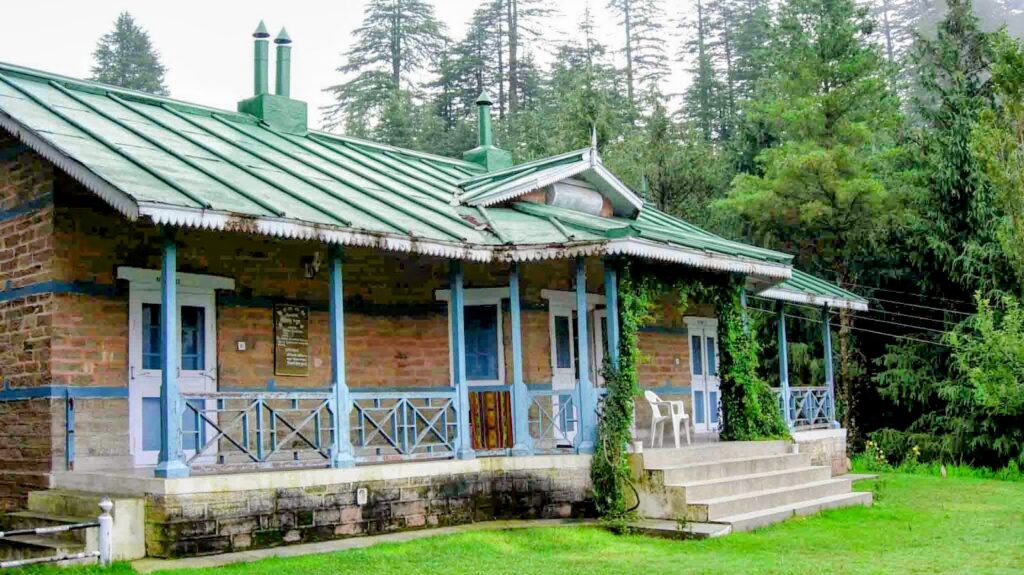
THE VANISHING TRAILS: UNTAPPED CINEMATIC GOLDMINE – The Dak Bungalow Trails of Himachal Pradesh
A CINEMATIC JOURNEY THROUGH HIMACHAL’S FORGOTTEN EMPIRE
A LOCATION PRODUCER’S ULTIMATE GUIDE
FOR: Creative Directors • Producers • Documentary Filmmakers • Ad Film Directors • Travel Vloggers/Bloggers • Travelers
What if the next breakthrough in Indian cinema isn’t hiding in Switzerland or New Zealand, but scattered across 728 forgotten time capsules just hours from Delhi? While the industry fights over the same overdone hill stations, Himachal Pradesh’s dak bungalow network remains cinema’s best-kept secret, a mathematically perfect production goldmine that filmmakers have barely scratched.
The Language of Forgotten Empires
Close your eyes. Listen. The wind carries whispers through century-old deodar beams. Creaking floorboards echo footsteps of sahib and mem sahib who departed decades ago, yet somehow never left. Musty leather-bound guest books crack open to reveal ink-stained testimonies of empire, adventure, and mystery. Wood smoke curls from kitchen chimneys that have warmed travelers since Victoria’s reign. Stone walls exhale stories, each crack a chronicle, each shadow a secret waiting for your camera’s discovery.
The air itself becomes atmospheric, thin with altitude, heavy with history. Frosted window panes frame Himalayan peaks that have watched empires rise and fall. Brass door handles, worn smooth by countless palms, turn with the weight of accumulated time. This is cinema that breathes authenticity.
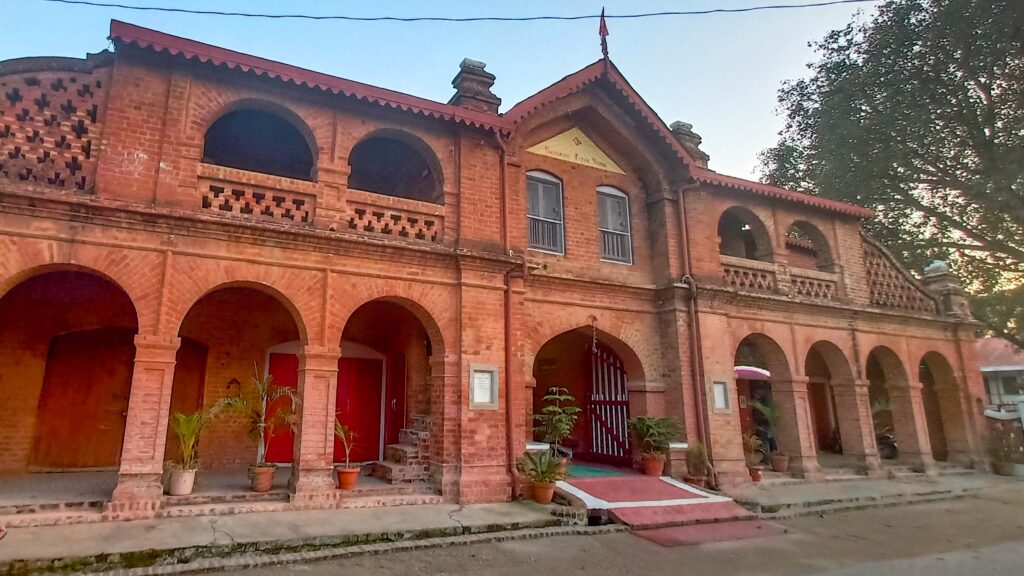
Stop Thinking Accommodation, Start Seeing Narrative Architecture
350 strategic narrative anchors positioned exactly 12 kilometers apart across Himachal Pradesh. Not random locations, but cinematic waypoints calculated by British engineers for maximum dramatic potential. Each one a ready-made three-act structure built in stone and timber: the approach building tension, the rest house as contained dramatic space, and the departure beckoning the next revelation.
The competitive advantage? While others scramble for overpriced studio sets and crowded tourist locations, you gain access to authentic colonial architecture, built-in atmospheric storytelling, systematic location network, budget-friendly rates, and untapped cinematic territory.
The Genesis: Imperial Blueprint for Modern Cinema
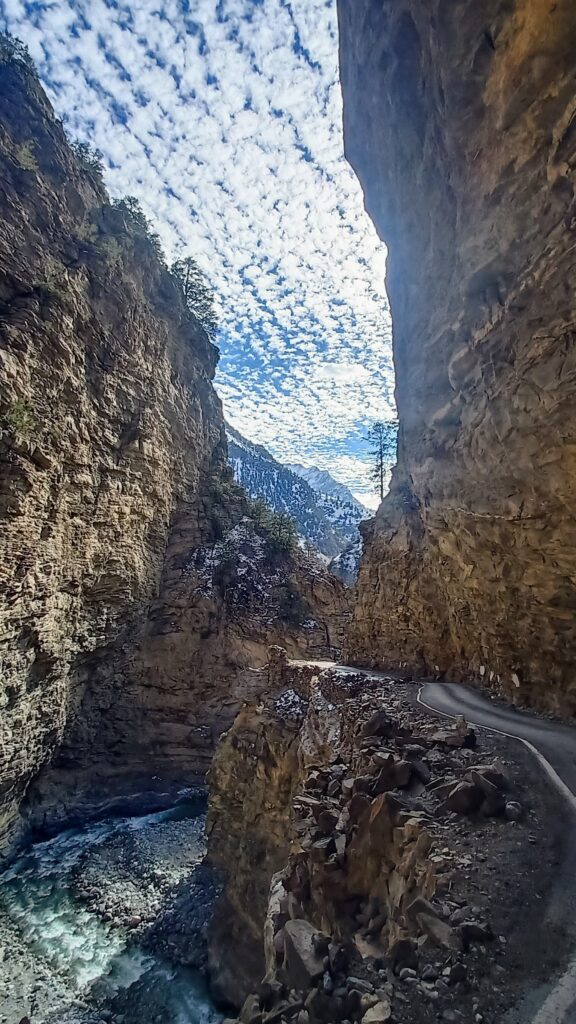
The Great Hindustan-Tibet Road Legacy (1850-1891)
The story begins in 1850 when Lord Dalhousie commissioned Commander-in-chief Sir Charles Napier to design what would become cinema’s most extensive ready-made production network. The immense machinery of the East India Company was pressed into service to create a 459-kilometer strategic corridor from the Punjab plains to the Shipki Pass on the Indo-Tibetan border.
This wasn’t merely road construction, it was empire building through infrastructure. The road brought trade circuits of the legendary Silk Route into focus, carrying musk, borax, wool, livestock, dry fruits, precious and semiprecious stones between Tibet, Kashmir, Ladakh, and Yarkand. But more crucially for modern filmmakers, it established the mathematical precision of rest house placement, every 12-15 kilometers, the distance mules could haul loads each day.
Historical Intelligence:
Famous visitors documented in century-old guest books include Marco Pallis and Giuseppe Tucci, international explorers whose signatures still grace the leather-bound registers that today serve as authentic period props requiring zero reproduction costs.
Bollywood’s Colonial Architecture Connection
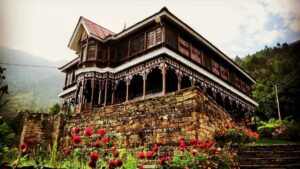
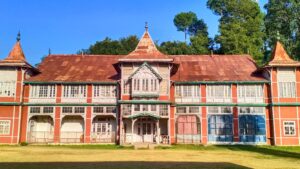
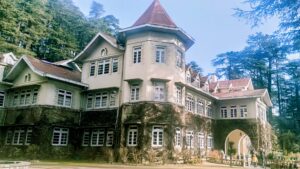
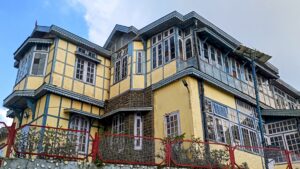
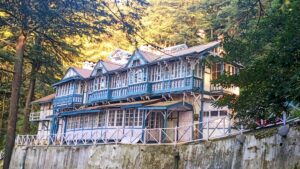
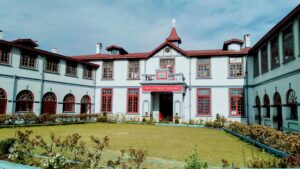
While mainstream Bollywood utilizes Himachal’s hill stations, some productions have specifically leveraged colonial architecture. “3 Idiots” filmed at Woodville Palace, showcasing pure Victorian colonial authenticity. “Black” by Sanjay Leela Bhansali was majorly filmed in Woodville Palace, demonstrating how colonial architecture becomes character. “The Jewel in the Crown” used Sundarban cottage in Mashobra, proving international recognition of Himachal’s cinematic potential. “Lootera” immortalized Kalatop Forest Rest House in its final, haunting scenes. Rajesh Khanna’s “Kudrat” featured Shimla’s Gaiety Theatre, where the opening segment of “Humein Tumse Pyaar Kitna” was filmed in its historic auditorium. This demonstrates how colonial architecture integrates into Bollywood’s narrative fabric, creating emotional weight through authentic period settings.
The Ruskin Bond Legacy: From Stories to Screen
Ruskin Bond’s supernatural tales weren’t fiction, they were oral histories collected from chowkidars, forest guards, and travelers who experienced unexplained phenomena across Himachal’s rest house network. Bond identified that rest houses built between 1880-1920 showed highest supernatural activity, a pattern that modern paranormal investigators confirm through electromagnetic readings that spike in these locations due to limestone foundations and iron fixtures.
ZEE5’s breakthrough web series “Parchayee: Ghost Stories by Ruskin Bond” proved the cinematic goldmine waiting in Himachal’s rest houses. Shot in surreal cinematic locations across India with mystic, magical, occult, psychic and supernatural elements, the series specifically utilized Himachal’s colonial architecture for its authentic supernatural atmosphere. The series featured episodes like “The Ghost in the Garden” and “The Wind on Haunted Hill,” directed by V.K. Prakash and Aniruddha Roy Chowdhury, proving that national award-winning directors recognize the untapped potential of these locations. One viewer review specifically highlighted: “Production company has chosen awesome location of Himachal Pradesh to shoot their episodes and you will love it if you are a fan of Himachal.”
The Penelope Chetwode Memorial – Khanag Rest House
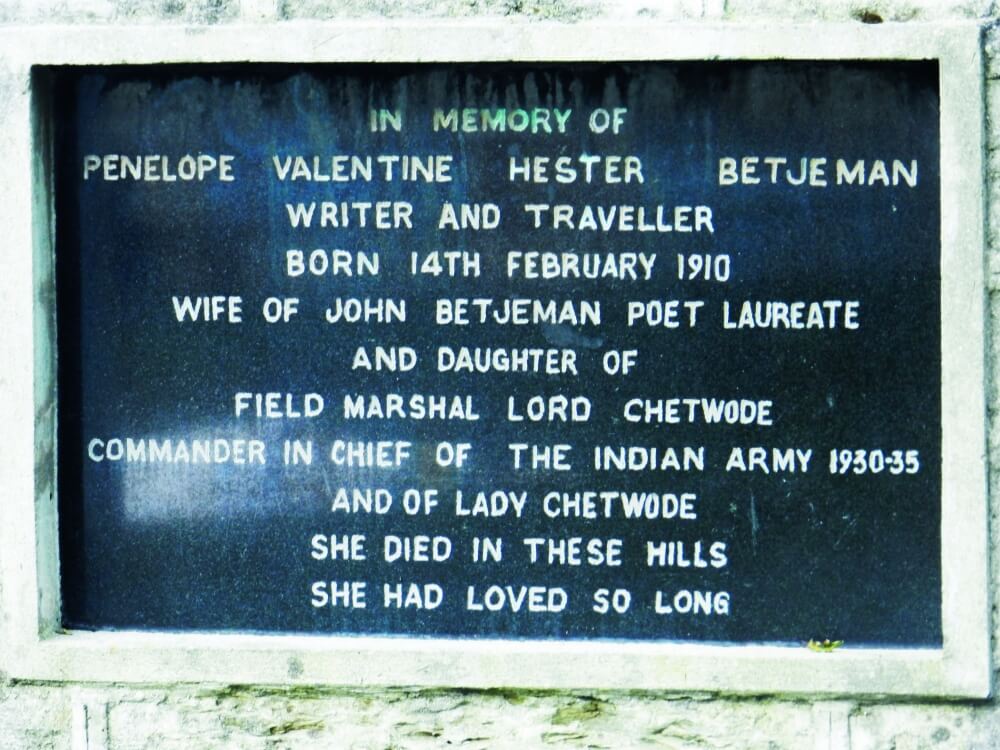
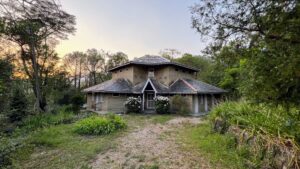
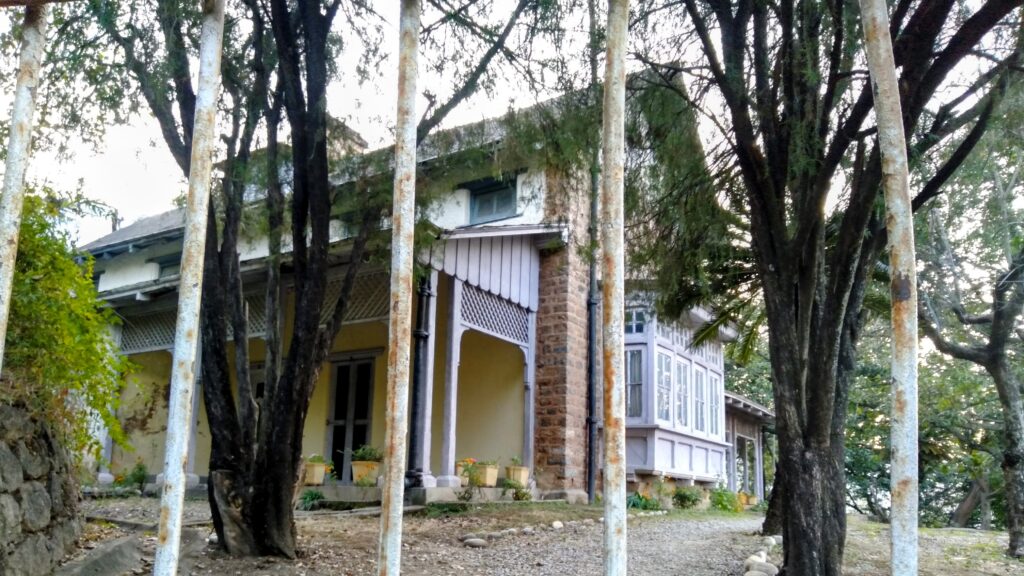
No cinematic journey through Himachal’s vanishing trails would be complete without pausing in the serene lawns of Khanag Rest House, nestled just below Jalori Pass. This is not merely a stopover, it’s a memorial to the restless spirit of Penelope Chetwode, renowned English travel writer and daughter of Field Marshal Lord Chetwode. Penelope first came to Shimla in 1930, and was further captivated by the Kullu valley’s mystique. Now this is a proper Dak Bungalow. Really well maintained PWD building with 3 guest rooms. Its even got this beautiful Memorial Stone, dedicated to the memory of a British Lady, in the front lawn. In her final pilgrimage, after a determined climb to Mutisher temple, Penelope breathed her last in Khanag, and in a gesture that fused her soul with the very essence of the mountains, her ashes were scattered into the Beas River.
Barot PWD Rest House: Gateway to Untamed Adventure
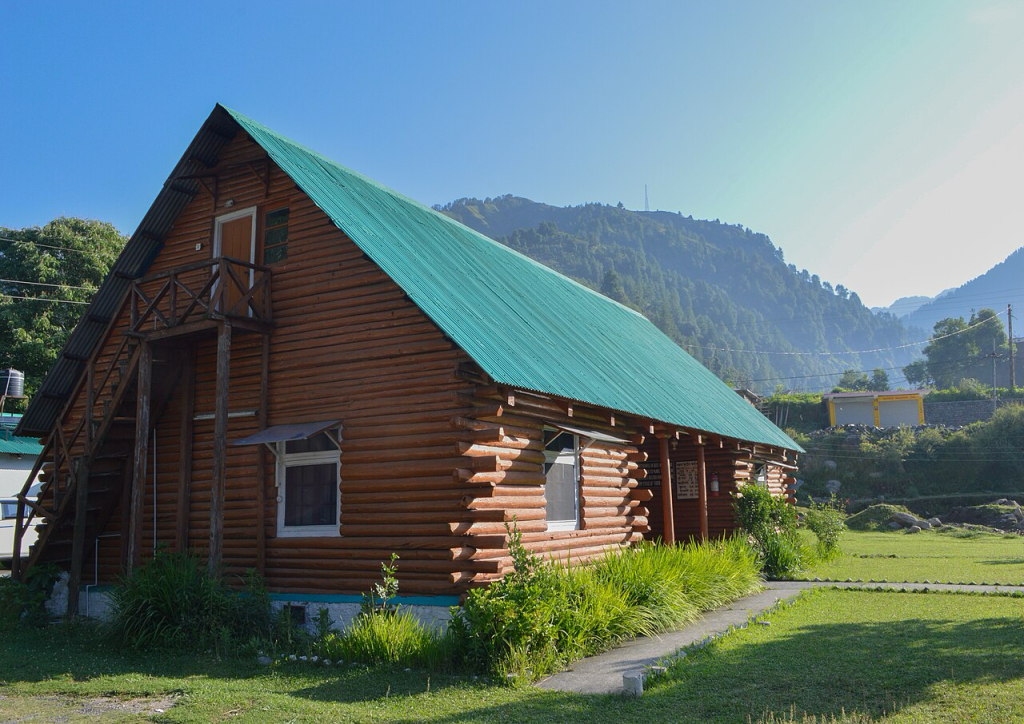
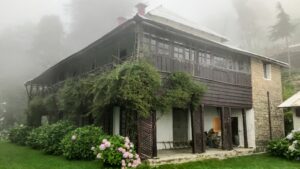
Barot PWD Rest House stands as a gateway to untamed adventure, overlooking the rushing Uhl River. Barot itself, once a British hydropower outpost, is now famed for its trout-rich waters and Nargu Wildlife Sanctuary’s wilderness. Here, travelers recount tales of midnight fishing with lanterns, hikes through mist-shrouded cedar forests, and evenings spent listening to the wind sing through wooden beams, a surreal soundtrack for those who crave elemental stories. The rest house, with five sets of rooms, is a favorite among offbeat wanderers, travel bloggers who seek solitude, and filmmakers scouting for raw Himalayan drama.
Shikari Devi Rest House: Temple of Clouds
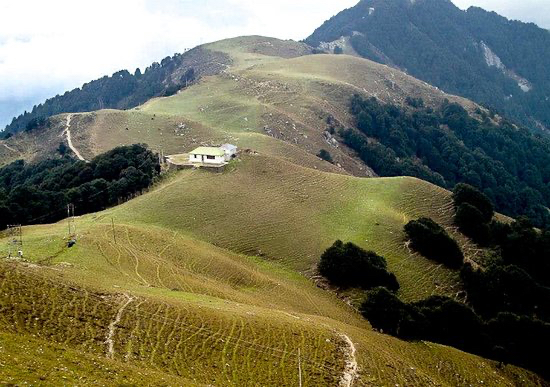
Scaling further into the cloud kingdoms, Shikari Devi Rest House crouches below the legendary roofless temple of Shikari Devi above Jhanjehli. Legends say the Pandavas built this temple during their Himalayan exile and that snow never settles on its open shrine. The rest house, a humble slant-roof structure often lost in clouds, hosts trekkers weathering the valley’s unpredictable fog and rain. Stories here abound: overnight thunderstorms trapping weary pilgrims, caretakers doubling as temple shopkeepers, and eerie, mist-wrapped silences punctuated by drums from the temple floor. Adventure aficionados describe sleeping through veil-like rainstorms, waking to butter-laced aloo parathas, and sharing shelter with stranded devotees. For storytellers, this is isolation made tangible, a set for legends in the making.
Kalatop Forest Rest House: Where ‘Cinema History ‘lootera’Was Made
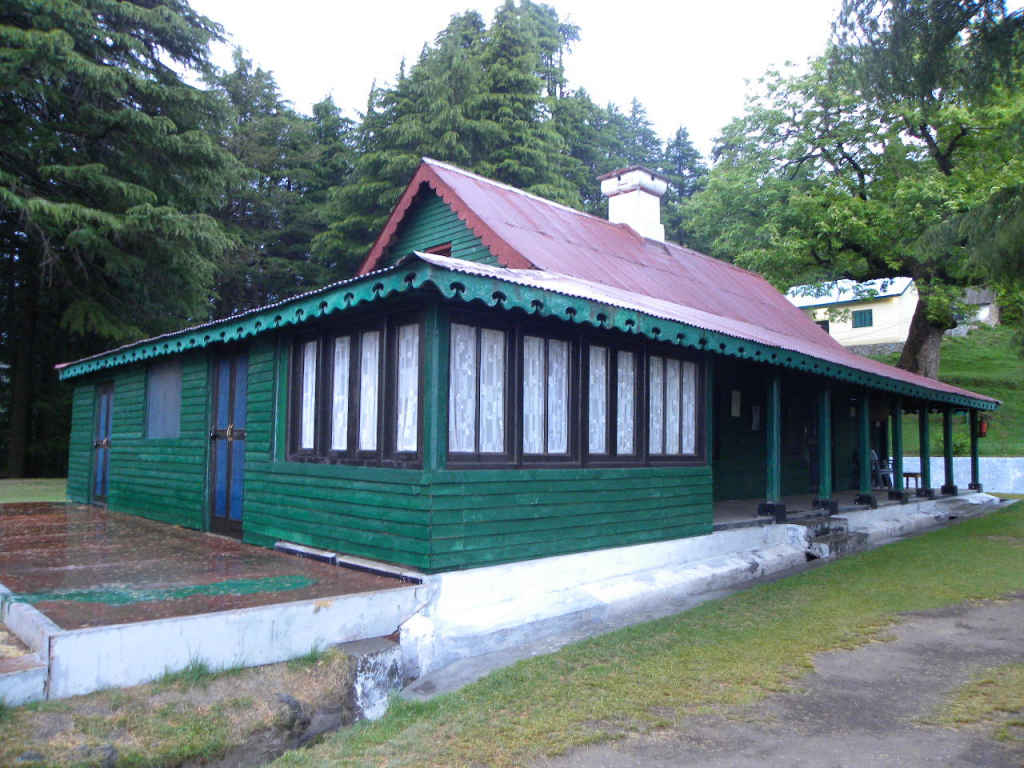
But perhaps nowhere is the intersection of cinema and solitude more evocative than at the Forest Rest House in Kalatop, Dalhousie. This seemingly modest bungalow, embraced by old-growth deodar forest and snow-laden paths, became immortal in Bollywood’s Lootera. Here, the final, haunting scenes were filmed, a location whose stark beauty forced the cast and crew to trek knee-deep in winter snow, braving logistical nightmares for that perfect frame. The bungalow’s colonial charm and the Kalatop sanctuary’s silence have inspired nature lovers, trek leaders, and filmmakers alike. Travelers still reminisce about the walk through forest trails to the house, admiring views where art, adventure, and old tales converge.
The Khansama’s Last Recipe – Daranghati PWD Rest House
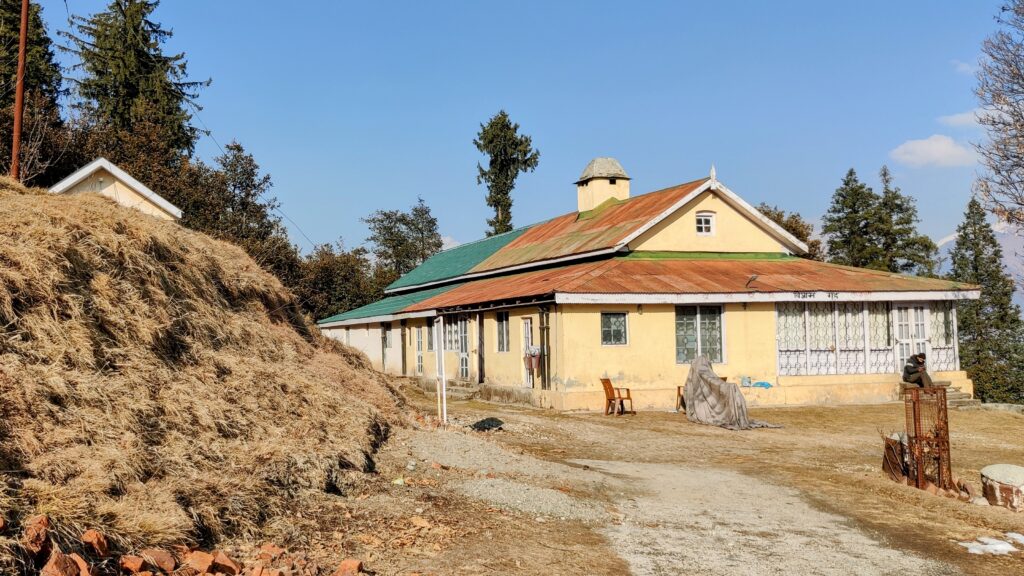
Deep in the forest belt between Shimla and Kinnaur, where cellular towers fear to tread, stands the Daranghati PWD Rest House, literally built in “The Middle of Nowhere.” If there is one Dak Bungalow that qualifies as being built in The Middle of Nowhere, its the PWD Rest House in Dharanghati. The whole of Dharanghati mainly consists of a tea shop, the PWD Rest House and a Devi Mandir (Shiraikoti Mata Temple), which is situated on a peak, a few kilometres up.But it’s the stories whispered by Sohan Singh, the chowkidar who maintained this post for 47 years, that transform this location from mere accommodation to cinematic goldmine. “Sahib, yahan par raat mein ajeeb awaazein aati hain,” he told visiting location scouts, his weathered hands pointing toward the colonial-era guest book dating back to 1892. The entries revealed a fascinating pattern: British officers, their Indian mistresses, and mysterious disappearances that locals still whisper about.
One independent filmmaker spent 14 days scouting these exact locations for a horror feature, discovering that the old khansama’s quarters still contain the original porcelain dinner set used to serve dak bangla roast chicken and caramel custard to weary British travelers. The non-functional grandfather clock alongside faded daguerreotypes of the Englishman credited with building the facility creates built-in period authenticity requiring zero CGI.
you can find his article here on team bhp
The Centenarian Circuit: Kinnaur’s 100+ Year-Old Network The – Old Hindustan-Tibet Road’s Crown Jewel
The Great Hindustan Tibet Road began under the charge of the Commander-in-chief Sir Charles Napier. Beyond Shimla, to the Shipki pass on the border, the route took 228 miles. While the Dalhousie road (proposed by lord dalhousie in 1850) brought the route into focus, the area had long been on one of the peripheral trade circuits of the legendary Silk Route. The path that passed the tract carried goods like musk, borax, wool, livestock, dry fruits, precious and semiprecious stones to and from Tibet, Kashmir, Ladakh and Yarkand. The development of this bridle path as the main commuting route led to the development of rest houses along the way, and no wonder their existence today is seeped in History, with the old visitor books showing names of famous visitors like Marco Pallis or Giuseppe Tucci.
To quote ‘Deepak Sanan’ & ‘Dhanu Swadi’ from their book ‘Exploring Kinnaur and Spiti in the Trans Himalaya’ -“The romance of the old HT road lies not only in the excitement of retracing a legendary route trod by many adventurous feet but also in the fact that it chronicles in its passage a remarkable transition in climate, vegetation, terrain, people and culture. From the monsoon fed greenery of the foothills, through the snow clad peaks of the main Himalayan ranges, to the barren aridity bordering Tibet, the people and their lifestyle change as vividly as the landscape “In its early days, the OLD HT road was a broad bridle path. While most travelers wrote accounts of their journeys from Shimla onwards, it is believed and should hold true that the Road actually starts from Kalka, which means its a total journey of about 450 kms to Shipki La from Kalka. In the olden days horses were used to transport the people and luggage to Shimla, when there was no Railway and The now wonderful Kalka-Shimla highway. It started from Kalka, found its way into Kasauli and Gambhar Pul (where a bridge still stands as testimony to its glorious past) and past small villages of Subathu, Kunihar reached Shimla. From here it wound its way through Narkanda, climbed towards Baghi and followed the ridgeline through Khadrala and Sungri to reach modern day Taklech from where it descended to Rampur (Bushahar), however there were two bridle paths which were built one going over the Daranghati pass over to Mashnu and then reaching Sarahan, home to The Goddess Bhimakali. Sarahan onwards it kept on the higher ridge, with the Sutlej far below and wound its way through Chaura, Taranda, Ponda, Nichar, Tapri, Urni and finally Kalpa. (The stretch from Sarahan to Nichar of the OLD HT is Now a wonderful trekking route where one stays at the century old rest Houses). At Nichar, THESE days one descends to main highway (NH22), only to climb towards Urni after Tapri (this all ismotorable now). From Urni we wind our way flanked by the grand view of the Kinner Kailash Massif, towards Kalpa. After Kalpa, it again ascends towards Pangi village and then descends towards Aren and further to Jangi. From Jangi the famous Kanum monastery is 16kms as we continue further up on the road towards Pooh. From Pooh the road descends again to meet the Sutlej at Dubling and then we start the ascent towards Namgia village 15 kms, the last village bordering Tibet before Shipki La. This is the route of the OLD HT road.
The Bottom Line: Cinema’s Next Evolution
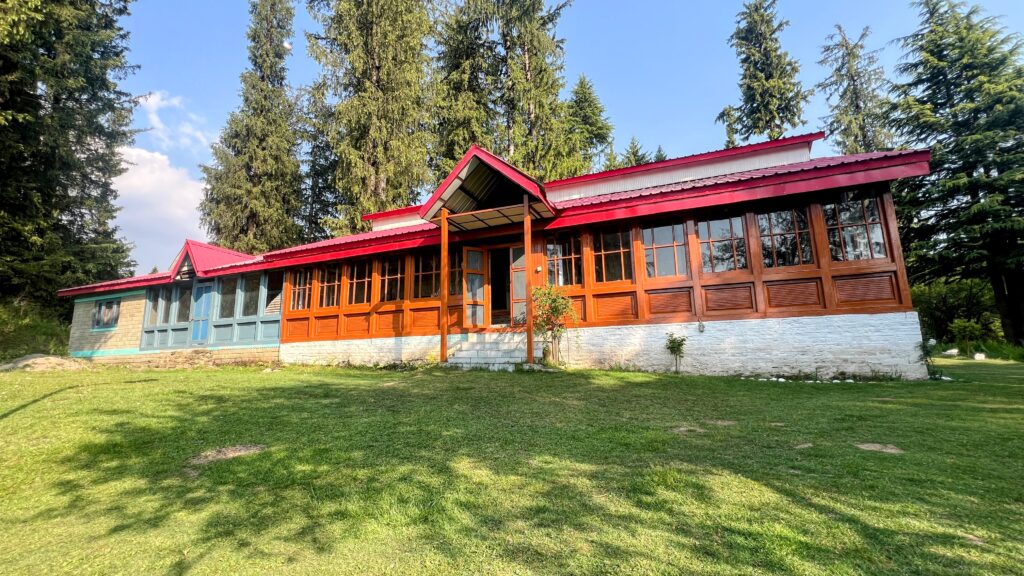
THE DAK BUNGALOW TRAIL isn’t just a journey through Himachal Pradesh, it’s a journey through cinema’s next evolution. The question isn’t whether these locations will transform Indian cinema. The question is: Will you be part of that transformation, or will you watch it happen from the outside?
While the industry fights over 20 mainstream locations, you have access to 728 locations with century-old stories embedded in the walls. The British built these rest houses every 12 kilometers because that’s how far you could travel in a day on foot. Today, that becomes your perfect shooting schedule—one location per day, building narrative momentum with each move.
Every rest house in Himachal – Shoja, Chindi, Janjheli, Goshaini, Seog, Craignano, and beyond, holds its own cryptic legends, sung softly by the wind. Each is a living set, soaked in stories: from Penelope’s ashes at Khanag, to midnight feasts and wildlife sightings at Barot, to a night spent in Shikari’s rain-washed silence, and cinematic snowdrifts at Kalatop. For wanderers, filmmakers, and writers, these colonial relics become more than locations, they’re narrative crucibles where history, mystery, and adventure collide in every whispered night and fog-draped morning.
suggested further reading
Himalayan Rest Houses – Harish Kapadia – READ HERE
dak bungalows & the ghosts who stay there – READ HERE
dak bungalow trail – READ HERE
romancing the old hindustan tibet road – READ HERE
“I scout the roads and the gaps, between travel, production management, music and locations, to land stories that feel lived-in. Thanks for reading. Drop comments and suggestions; they push me to sharpen the next recce, the next call sheet, the next ride. If a scene sparked, say the word, let’s build it, from Himachal to wherever the horizon breaks.”
Best,
Dhananjay Ahluwalia